Ribs and junctions
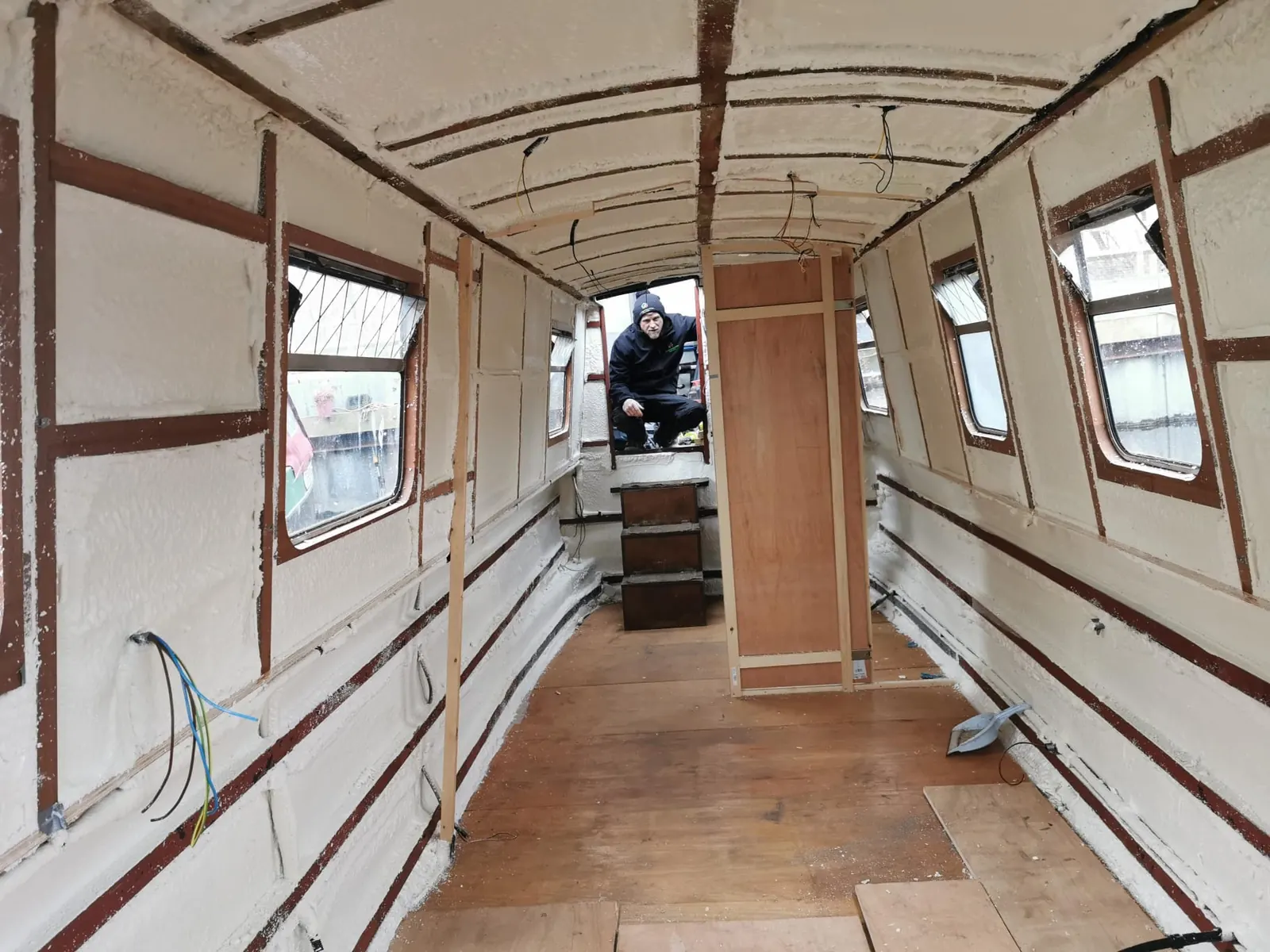
Decide how the specification treats ribs, cabin-to-roof junctions, doors and windows. A coating over broad panels does not automatically resolve every thermal bridge.
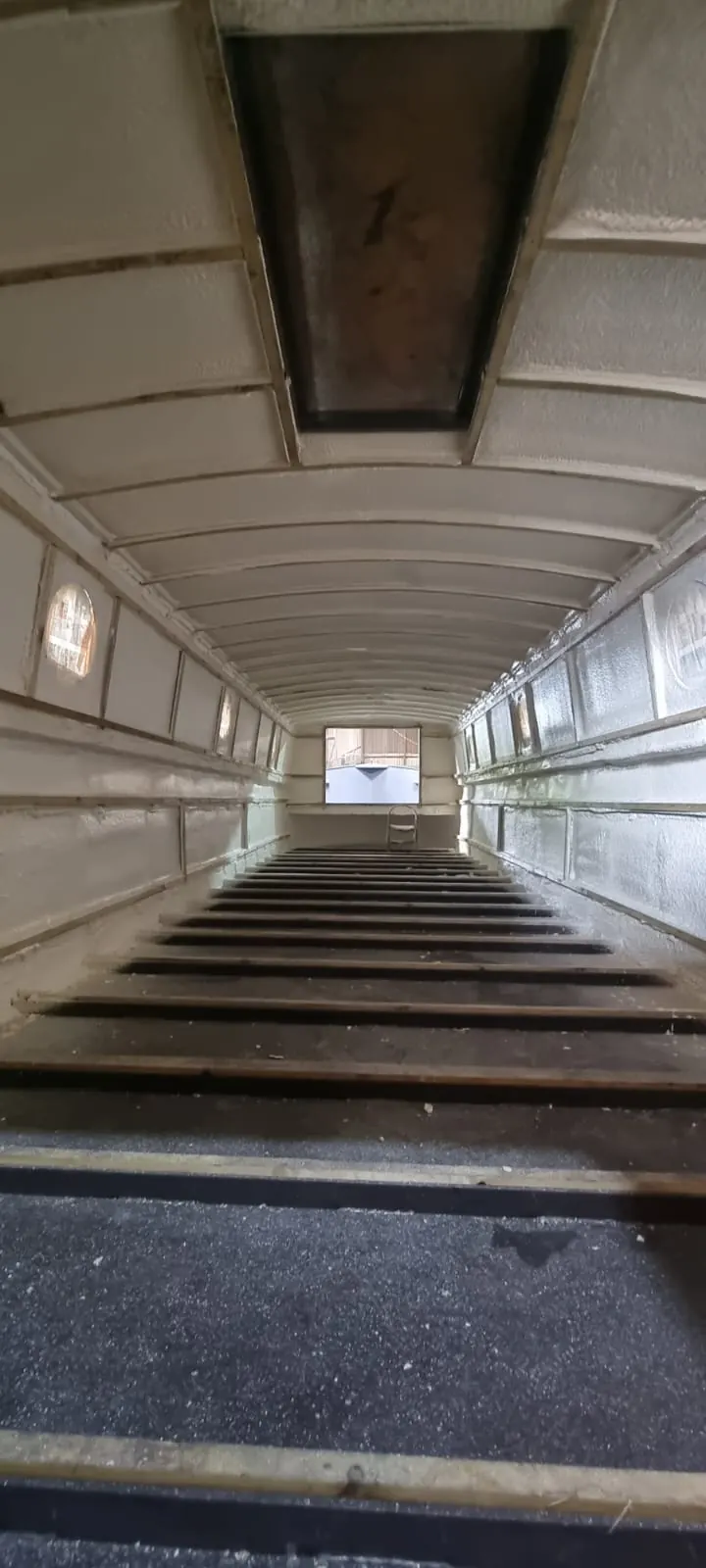
Spray foam insulation for narrowboat shells and accessible refits, with careful detailing around ribs, openings and cabin services.
Discuss your project →The limited width of a narrowboat makes the finished build-up important. Insulation thickness is only one component: battens, cable routes and linings also affect cabin dimensions. Define the complete fit-out before deciding the insulation scope.
A bare shell allows the installer to see the substrate and plan coverage. An existing narrowboat may need sections opened for assessment. The condition of steel and coatings, access to fittings and the vessel’s ventilation requirements should guide the decision.
Decide how the specification treats ribs, cabin-to-roof junctions, doors and windows. A coating over broad panels does not automatically resolve every thermal bridge.
Identify inspection points and routes for wiring, plumbing and heating. The insulation should be coordinated with planned maintenance rather than conceal components that need access.
Explain which linings can be removed and whether previous insulation is present. Existing foam, corrosion or unidentified coatings may need further investigation before new work.
Selected from the Duratite application library.
Send photographs, dimensions, site location and the intended use. Include known defects and the outcome you need, such as reducing heat loss or addressing cold-surface condensation.
The survey establishes the accessible substrate, preparation, moisture conditions and practical installation scope. Drawings and existing records help resolve interfaces with other parts of the building or vessel.
Compare the complete work package: preparation, insulation, protective finish, access and reinstatement. Agree responsibilities and the programme before the work begins.
Arrange inspection before the insulation is concealed. Keep the agreed specification, product details and installation records with the asset’s maintenance information.
Understand commercial spray foam costs · Compare insulation approaches
Do not assume that overlaying is suitable. The existing material, adhesion, moisture and underlying hull condition need assessment before specifying repairs or replacement.
No universal claim is appropriate. Continuity and junction design matter, while windows, doors and untreated metal can still influence surface temperatures.
The treated area, substrate condition, specified thickness, preparation, access equipment and finish all influence the price. Include the work programme and any removal or reinstatement in the enquiry so quotations cover the same scope.
Confirm the product and application, prepared substrate, intended thickness, junction details, protective finish and access arrangements. Ask for the relevant product information, installation records and the specific terms of any proposed warranty.
Send us your building details and our technical team will specify the right system and a clear budget. No obligation.