What asbestos encapsulation actually does
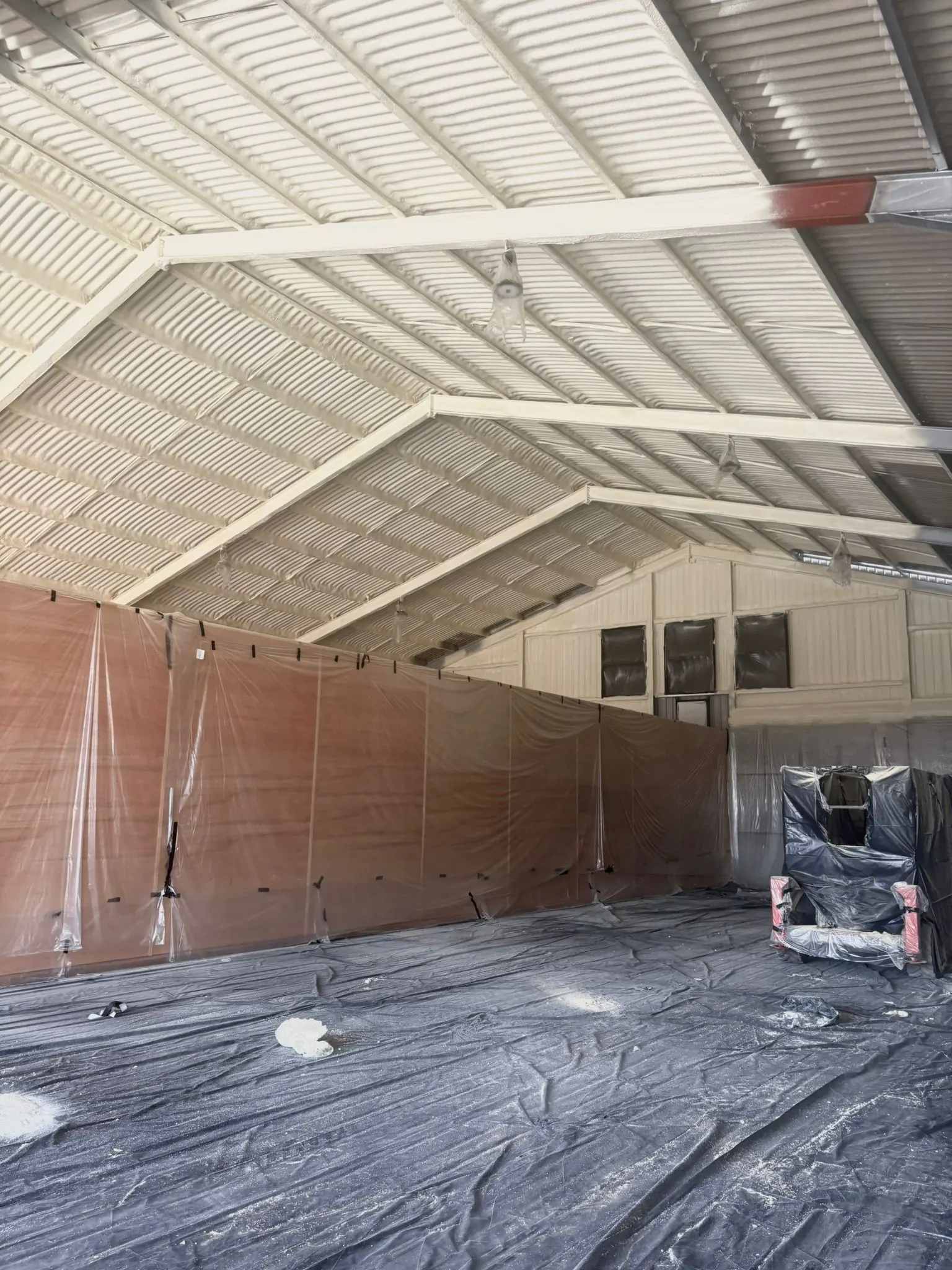
Encapsulation seals asbestos-containing material behind a bonded, continuous layer so that fibres are locked in place rather than released into the air. The surface is treated and bound, creating a barrier between the material and the building's internal environment. For owners of ageing industrial roofs, it offers a way to bring an asbestos cement roof under control without the upheaval and waste of a full strip-out, provided the material is in suitable condition to be sealed.
It is important to be clear about what encapsulation does and does not achieve. It does not remove the asbestos. The material remains in the building, sealed beneath the applied layer, and it continues to be recorded on the asbestos register and the management plan. Everyone responsible for the building must still know it is there, so the work is managed as a control measure rather than as a means of disposal or elimination.
- Seals and locks fibres behind a bonded layer
- Creates a continuous barrier over the surface
- Does not remove the asbestos from the building
- Material remains on the asbestos register and management plan
Encapsulation versus removal
Removal physically strips out the asbestos-containing material and disposes of it as hazardous waste. It is disruptive, time-consuming and, in many cases, licensed work that must be carried out by suitably authorised contractors. For some roofs that is genuinely the right answer, but it can also mean stripping out a roof that is otherwise sound and watertight, generating significant waste and downtime in the process.
Encapsulation offers an alternative where the material is in suitable condition. Rather than disturbing the asbestos, the surface is sealed in place, which can reduce disruption and avoid a full roof replacement. Whether sealing is appropriate for a given roof is never assumed, however; it must be confirmed by a competent assessor who weighs the material's condition and the building's circumstances before any approach is recommended or specified.
When encapsulation is appropriate
Encapsulation is only suitable where the asbestos-containing material is in good enough condition to be sealed rather than removed. Where sheets are badly degraded, broken, friable or unstable, sealing may not be the correct route and removal or another option must be considered instead. The decision turns on the actual state of the material, not on a preference for whichever method seems cheaper or quicker on paper.
A competent assessor confirms suitability for each individual roof, taking account of the material's condition, the building's use and the duty holder's wider management plan. ThermoFoam works only on commercial, industrial and agricultural buildings, never on domestic property, and treats every assessment on its own merits. No two roofs are identical, so each is judged against current asbestos regulations and the assessor's specific findings before any work is proposed.
- Material must be in sound, stable condition to be sealed
- Degraded, broken or friable sheets may require a different approach
- A competent assessor confirms suitability for each roof
- Considered as part of the building's overall management plan
Where it sits in asbestos management
In line with current asbestos regulations, duty holders for non-domestic premises must manage the asbestos in their buildings. That means knowing where it is, recording it, assessing its condition and keeping it in a controlled state so that it does not present a risk to occupants or maintenance workers. Encapsulation is one tool within that wider duty to manage, sitting alongside monitoring, labelling and, where necessary, removal.
Because the material stays in place, encapsulation does not bring the duty holder's responsibilities to an end. The asbestos remains on the register, the management plan is updated to record its newly sealed condition, and the material continues to be monitored over time. Encapsulation changes how the material is controlled; it does not change the underlying fact that the building still contains asbestos that must be managed.
A non-licensed process
Encapsulation that seals asbestos in place, rather than disturbing or removing it, is generally treated as a non-licensed activity, distinct from the licensed work involved in stripping out asbestos. The precise requirements depend on the type of material and the method used, so each job is assessed against current regulations and the competent assessor's findings rather than assumed to fall into a particular category at the outset.
This distinction matters for planning, programming and cost, but it does not in any way reduce the need for care. The work still demands proper assessment, the right method statement and competent operatives who understand the material they are working with. ThermoFoam approaches each project methodically, confirming what is genuinely appropriate before any work is specified, so that the chosen route is both compliant and right for the building.
Why building owners choose it
For owners of ageing industrial and agricultural roofs, encapsulation can be an attractive way to bring an asbestos roof under control without the cost and disruption of a full strip-and-replace. It can often be carried out while the building remains in use, and it avoids generating the large volumes of hazardous waste that removal produces, which appeals to operators trying to keep premises running and budgets contained.
Even so, it is never presented as a universal answer. The right decision balances the material's condition, the building's intended future and the duty holder's ongoing obligations under current asbestos regulations. ThermoFoam, part of the Duratite Group of Companies, helps commercial clients understand whether sealing in place is genuinely the appropriate route for their particular roof, and is candid when it is not.