External foam and finish
Consider when both the weather-facing roof and insulation need attention. Survey the existing surface, drainage and details, then specify compatible roofing foam and weather protection together.
External roofing foam with a specified waterproofing finish for suitable commercial roofs. Explore exterior asbestos encapsulation and request a survey.
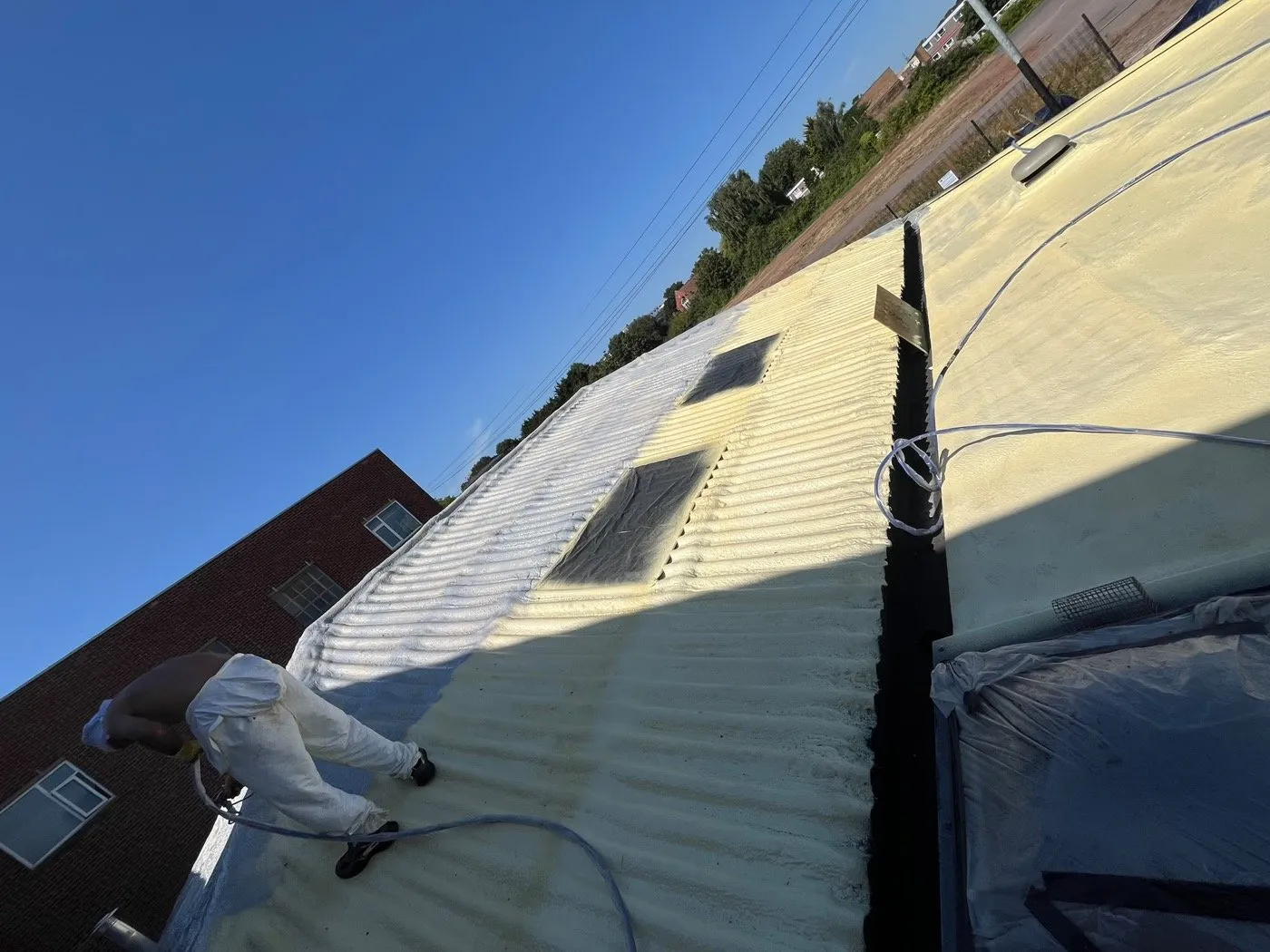
ThermoFoam offers external spray foam roofing for suitable commercial and agricultural roofs. Applied from above, the roofing foam follows the assessed roof profile and becomes part of an insulated roof build-up. The complete system includes its specified weatherproof finish and details at roof edges, outlets, rooflights and penetrations.
Where the aim is to upgrade the weather-facing roof as well as the insulation, an external system may be the appropriate route. Where the requirement is an internal thermal upgrade, underside spray foam insulation may be more suitable. The survey establishes the route and whether any roof repairs are needed first.
For a suitable asbestos-cement roof, an external foam system can cover the top face of the sheets as part of an assessed encapsulation project. This is a separate application from interior encapsulation using underside foam. Some projects may require work on both sides; neither route should be assumed appropriate without assessing the roof.
The asbestos material remains present. The method of work, access and any preparation must follow the asbestos risk assessment, and the completed work remains part of the building's asbestos management records. Broken or structurally unsuitable roofs need the appropriate remedial route rather than being covered over.
Check substrate condition, existing coatings, leaks, moisture, drainage, access and the building's intended use. On asbestos roofs, review the survey information and define the asbestos controls before deciding how to prepare or treat the surface.
Choose the roofing-grade product, thickness and application method for the required build-up. The insulation and condensation design should consider the existing construction, rather than using a standard thickness for every building.
The finished roof needs the specified compatible membrane or coating. Gaco S42 is a silicone coating, not spray foam; membrane-and-top-coat systems are another route where specified. Product selection, coating thicknesses and roof details must be confirmed together.
Handover should identify the products and installed build-up, relevant photographs, maintenance requirements and applicable warranty terms. Roof inspection and maintenance remain part of looking after the finished system.
Consider when both the weather-facing roof and insulation need attention. Survey the existing surface, drainage and details, then specify compatible roofing foam and weather protection together.
Consider when the primary requirement is an internal thermal or condensation-control upgrade. It does not replace repairs or waterproofing to the weather-facing roof.
Damaged sheets, deficient drainage, structural concerns or an unsuitable existing build-up may require repairs or a different roofing solution before insulation is considered.
Dove Lane, SAICA and Surbiton — real roofs, specified systems and documented installation work.
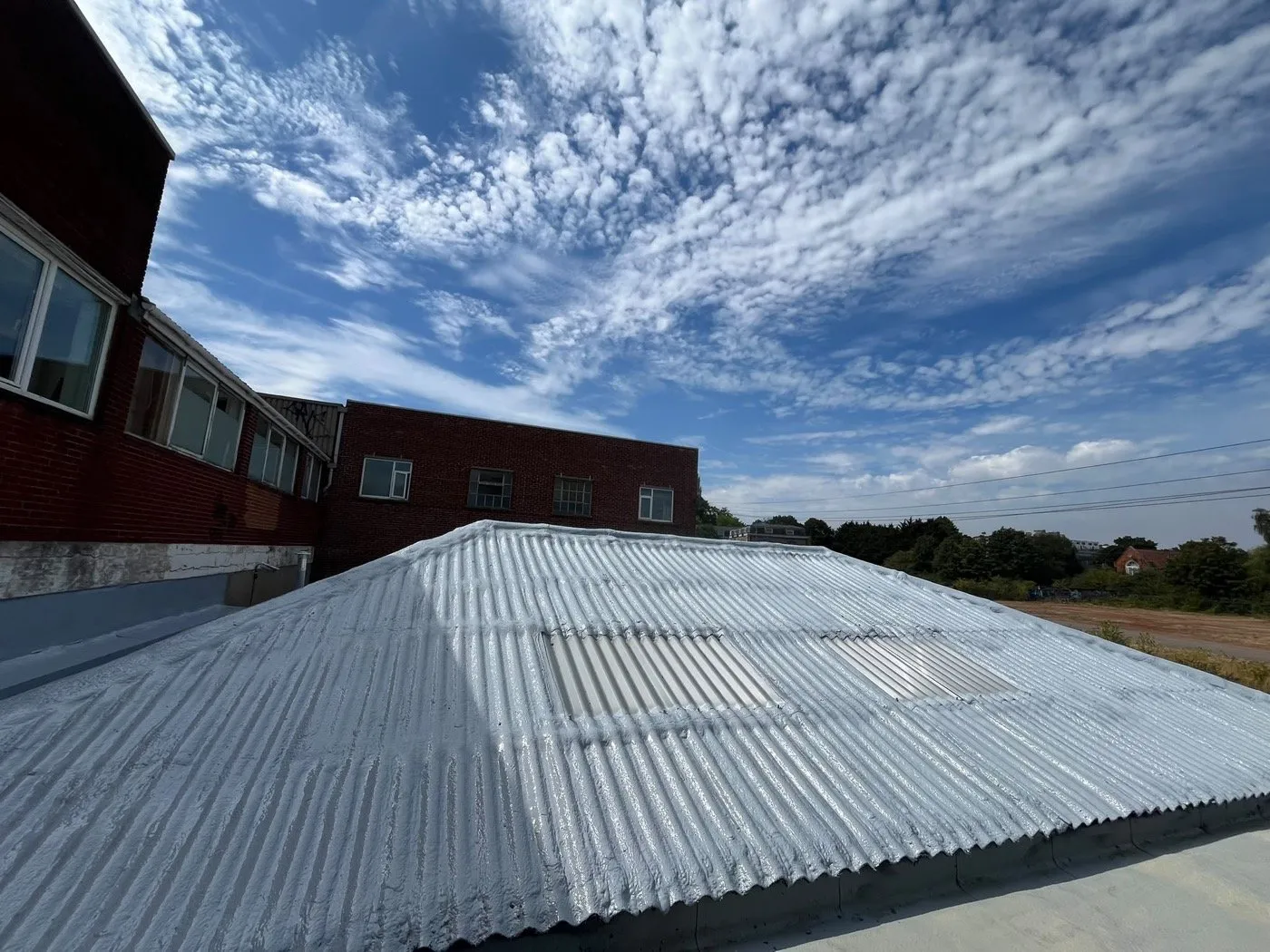
204 m² · Purios HR roofing foam, Impermax membrane and Colodur finish.
View the project →
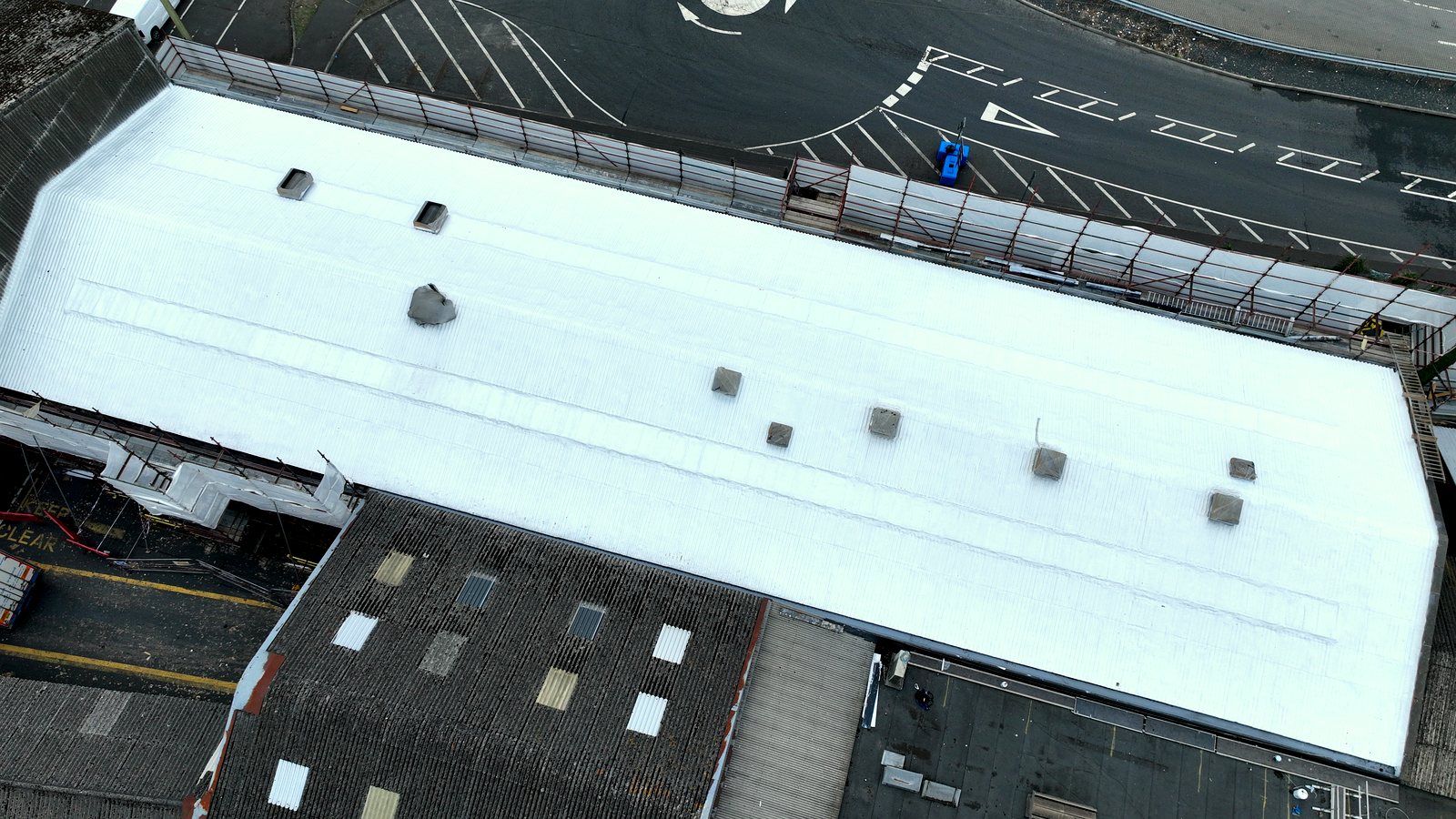
1,090 m² · Unit 3 roofing foam with GacoFlex U91 and U92 coatings.
View the project →
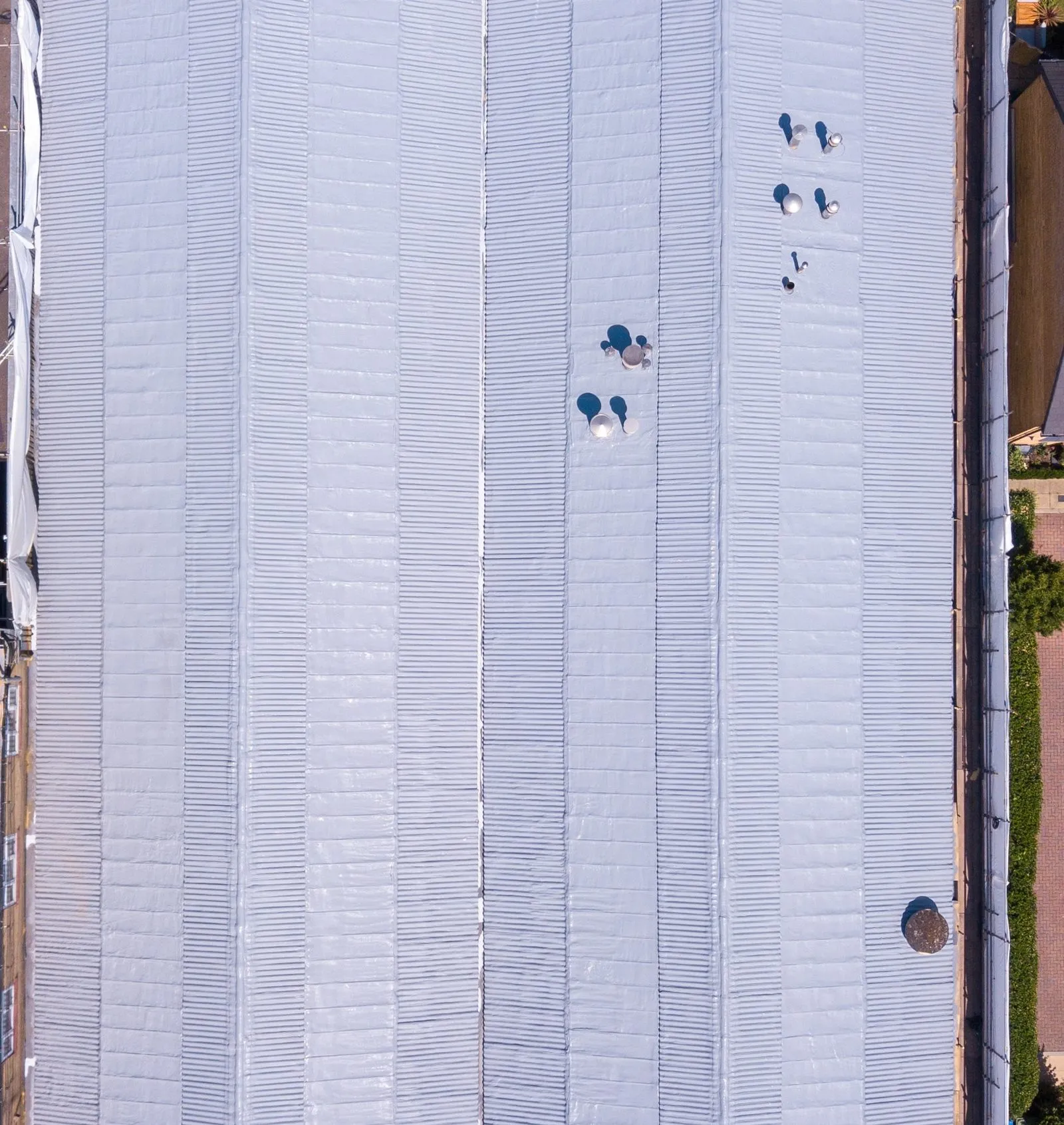
1,575 m² · Closed-cell roofing foam with a GacoFlex S42 silicone finish.
View the project →
Roof area, condition, preparation, access, insulation thickness, membrane specification and detailing all affect the quote. A price for foam alone does not describe the cost of a completed external roofing system.
Tell us whether the priority is insulation, water ingress, asbestos encapsulation or a combination. We will assess the relevant approach for your building. Explore flat roof insulation, corrugated roof insulation and the full spray foam service range.
Send us your building details and our technical team will specify the right system and a clear budget. No obligation.
Yes, where the roof assessment supports an external roofing system. The specification must include a suitable roofing foam and its compatible waterproofing and UV-protective finish. Interior insulation foam should not simply be substituted for an exterior roofing system.
No. Underside insulation is applied from inside the building. External roofing foam is applied from above and forms part of a weather-exposed roof build-up. The product, coating, detailing and access requirements differ.
External encapsulation may be suitable for assessed asbestos-cement roofs. The asbestos condition, supporting structure, proposed preparation and safe access need assessment before a method is selected. Encapsulation leaves the asbestos in place and ongoing management remains necessary.
The external system needs the specified waterproofing and UV protection. Depending on the approved build-up, this may be a suitable silicone finish or a membrane with a separate UV-stable top coat. The foam, coating and details must be selected as one compatible system.
Both can be considered, subject to substrate condition and system suitability. Rooflights, outlets, ridges, laps and penetrations are assessed and detailed as part of the design.
Warranty terms depend on the products, complete build-up and installation specification. Ask for the applicable manufacturer-backed product terms and the separate workmanship cover with your quotation.
Send the site postcode, approximate roof area, substrate, available photographs, existing asbestos information where relevant, and a description of leaks or insulation requirements. Photographs should be taken from a safe position without accessing a fragile roof.