Insulation Above Suspended Ceilings
Insulate above suspended ceilings without stripping out the grid — spraying the soffit or deck above for instant thermal performance.
Why spray foam for ceiling voids
In offices, retail units and public buildings, the ceiling void above a suspended grid is often a major source of heat loss and condensation. The structural deck or roof above is frequently uninsulated, and the void connects to risers, plant and adjoining spaces, letting conditioned air leak away. Reaching it usually means stripping the tile-and-grid system out — a costly, disruptive job in occupied premises.
Enverge closed-cell spray foam is applied directly to the underside of the deck or soffit above the grid, working within the void without removing the whole ceiling system. It expands into the deck profile and around services, self-bonding as it cures to form a continuous insulating air seal. Tiles can be lifted in sections for access, so the occupied space below stays largely intact throughout the works.
The result is a sealed, insulated deck above the ceiling that cuts heat loss, stops warm air escaping into the void, and removes the cold surface where condensation drips onto tiles. Energy use falls, the void stays dry, and the visible ceiling is reinstated — all without a full strip-out or major downtime.
The benefits for ceiling voids
Insulates The Deck
Sprayed onto the structural soffit above the grid, sealing the uninsulated deck that loses heat from the void.
No Full Strip-Out
Tiles lift in sections for access, so the ceiling system and occupied space below stay largely intact.
No Tile Staining
Sealing the cold deck removes the condensing surface that drips and stains suspended ceiling tiles.
Seals The Void
Stops conditioned air leaking into risers and plant, improving the building's overall airtightness.
Works Around Services
Expands around ducts, cable trays and pipework already running through the congested ceiling void.
Minimal Downtime
Phased access keeps retail and office floors trading while the deck above is insulated.
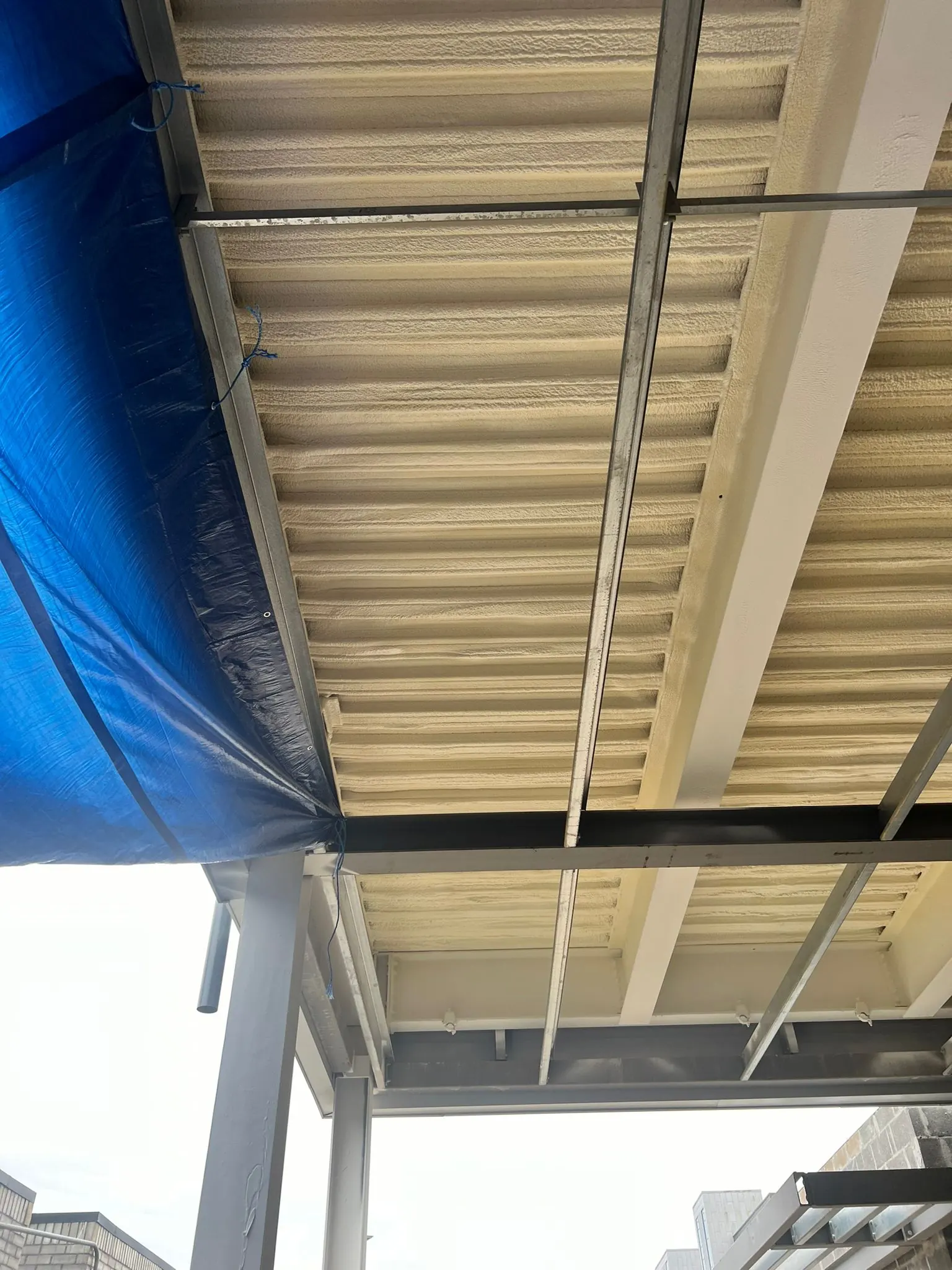
Sprayed to the deck above
Foam bonds to the concrete soffit or roof deck above the ceiling, sealing the true thermal line around existing services.
Applied to the structural soffit above the suspended grid, Enverge closed-cell foam expands into the deck profile and around void services, curing to a rigid, self-bonded layer. It insulates the previously bare deck and seals air leakage into the void, raising the soffit surface temperature so condensation no longer forms and drips onto the ceiling tiles below.
- Sprayed to the deck above without full ceiling strip-out
- 25-year manufacturer-backed warranty
- Stops condensation dripping and staining tiles
- Seals air leakage into risers and plant voids
Enverge Nexseal LE — verified performance
Typical published values for Enverge Nexseal LE closed-cell foam. Full technical specification →
Specification & compliance for ceiling voids
Sprayed directly to the underside of concrete slabs, car-park decks and metal soffits, closed-cell foam forms one continuous insulated layer with no joints, fixings or cold bridges — the failure points board systems can't avoid on soffits. The foam's low exothermic reaction and strong adhesion make it suitable for overhead application to concrete, Metsec decks and steel framing alike.
Depths of 25–100 mm are specified to hit the required U-value, and where the soffit needs a fire-rated finish the system is completed with DC315 intumescent coating for Euroclass B-s2,d0. The result: warm floors above, no condensation staining below, and a 25-year manufacturer-backed warranty.
From enquiry to warranty
Enquire
Tell us about your ceiling voids & building.
Survey
Free survey of your ceiling voids & condensation check.
Specify
The right system for your ceiling voids.
Install
Approved applicators, minimal disruption.
Warranty
Handover pack & 25-year warranty.
Real ceiling voids spray foam applications
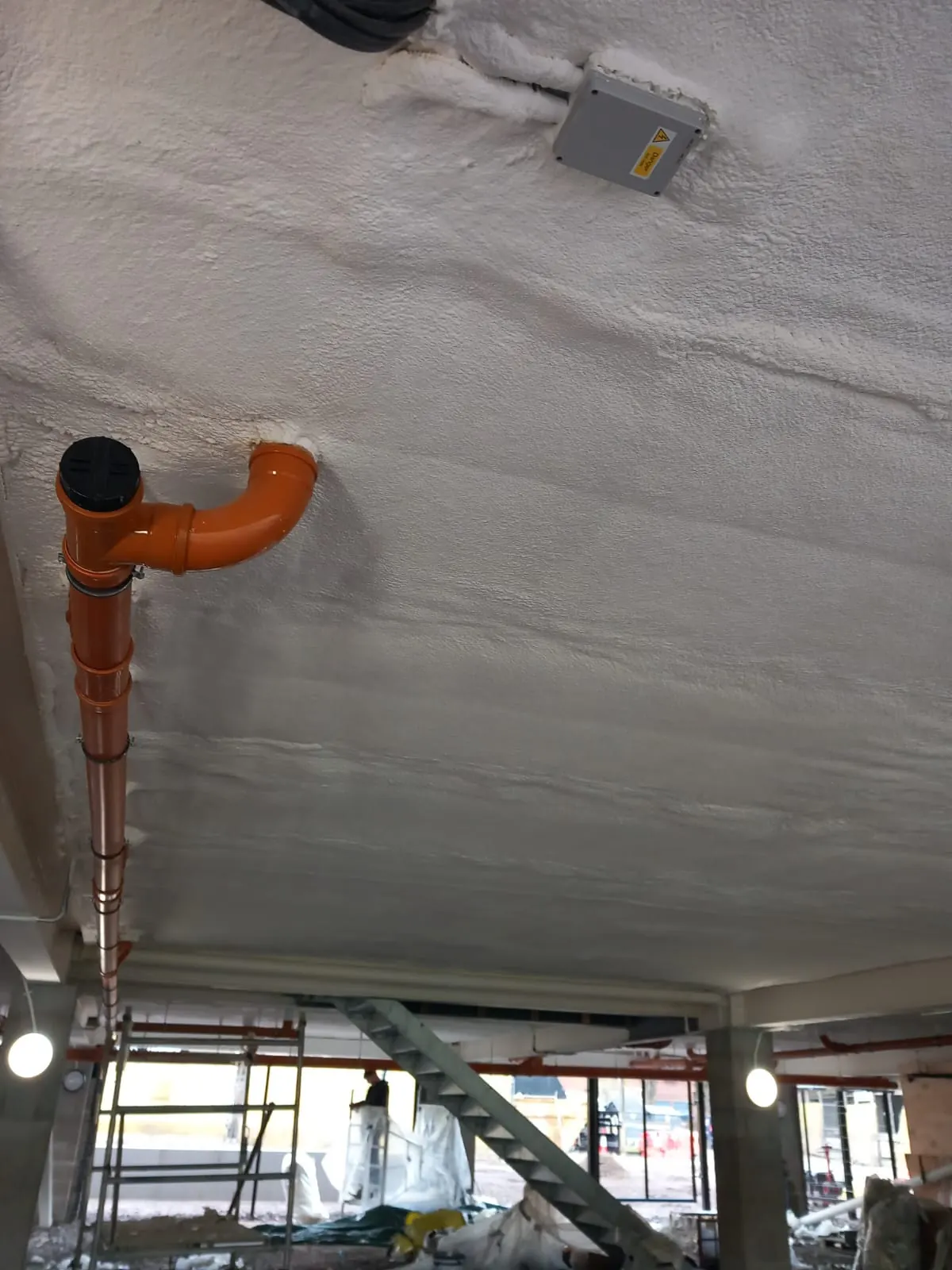
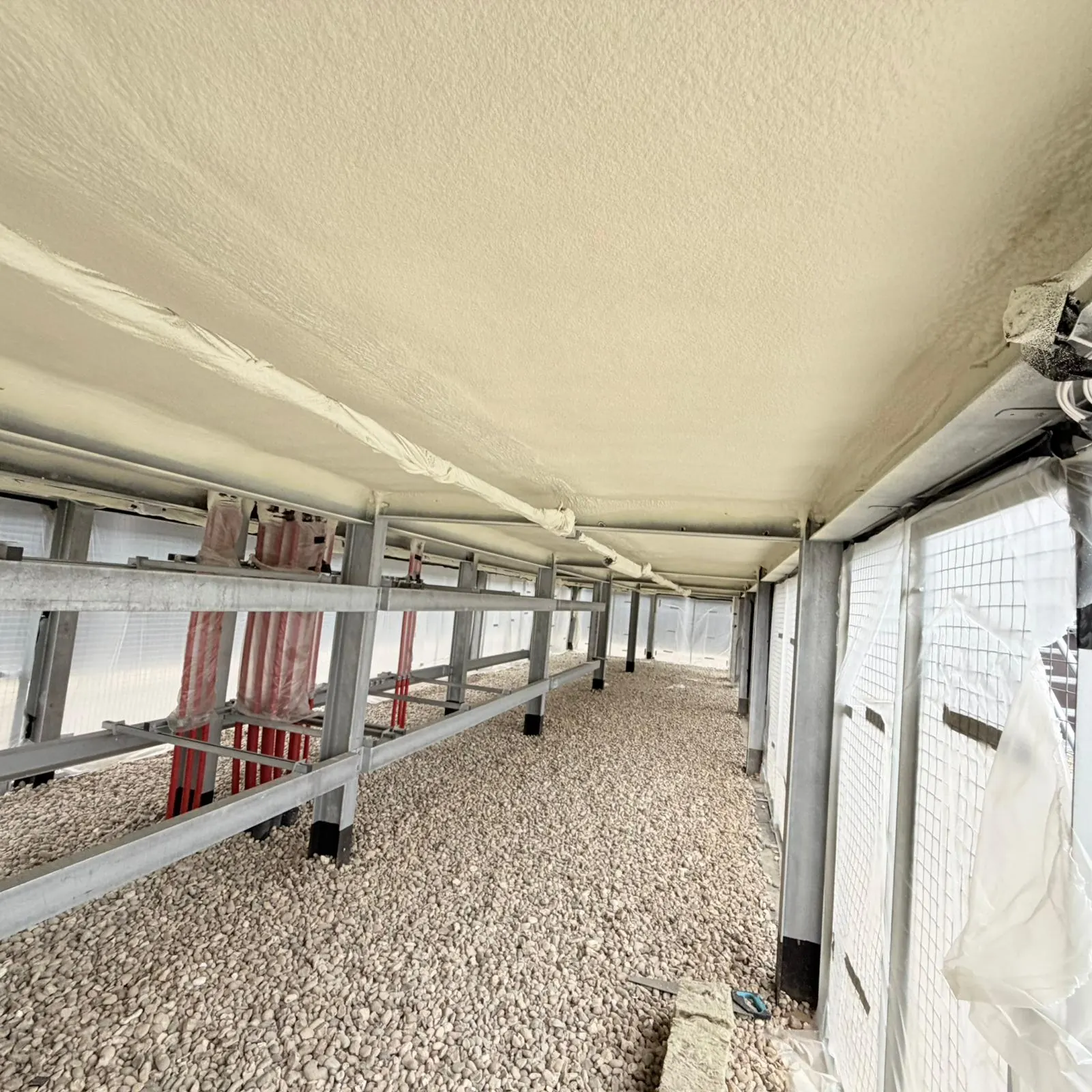
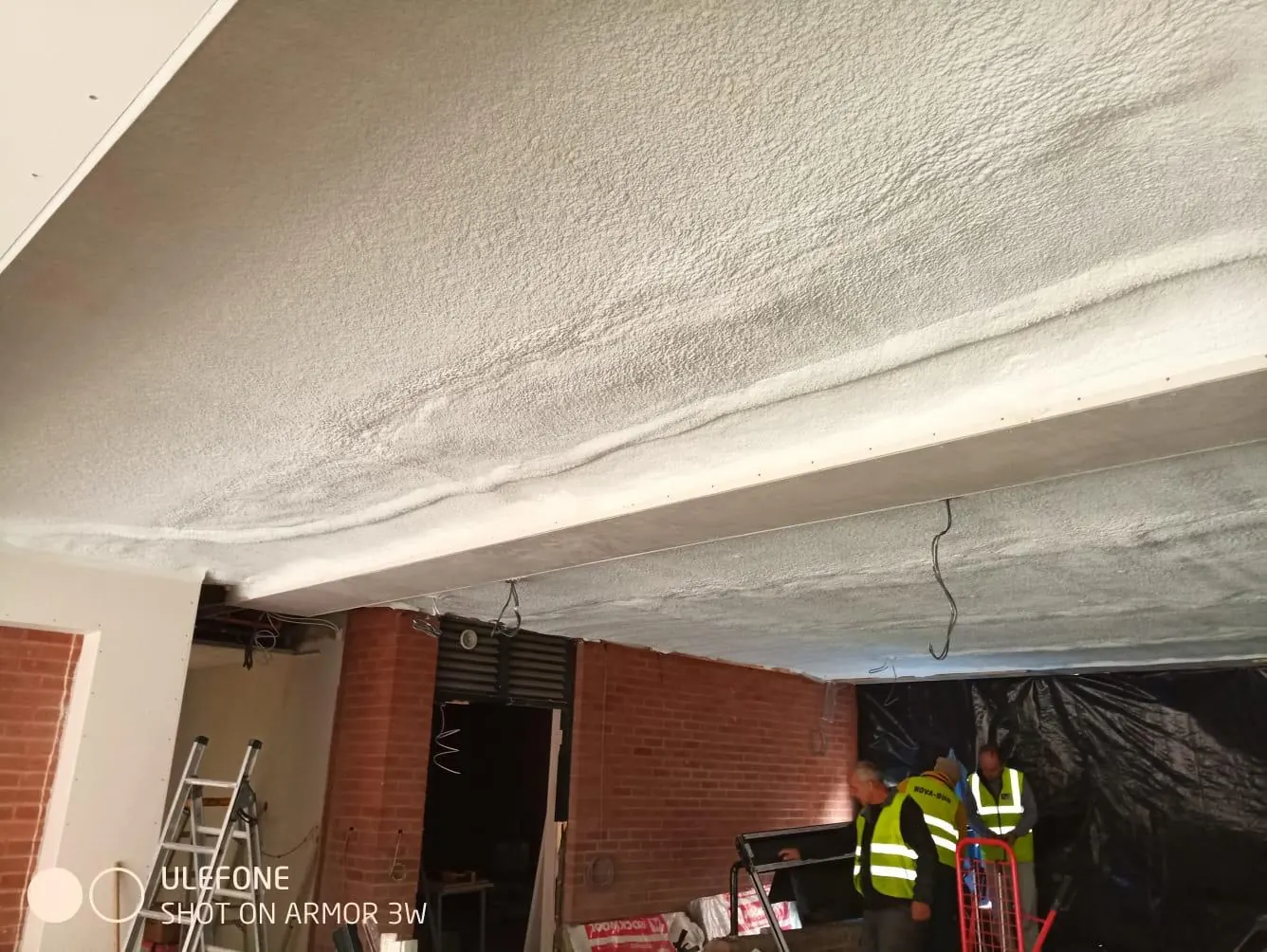
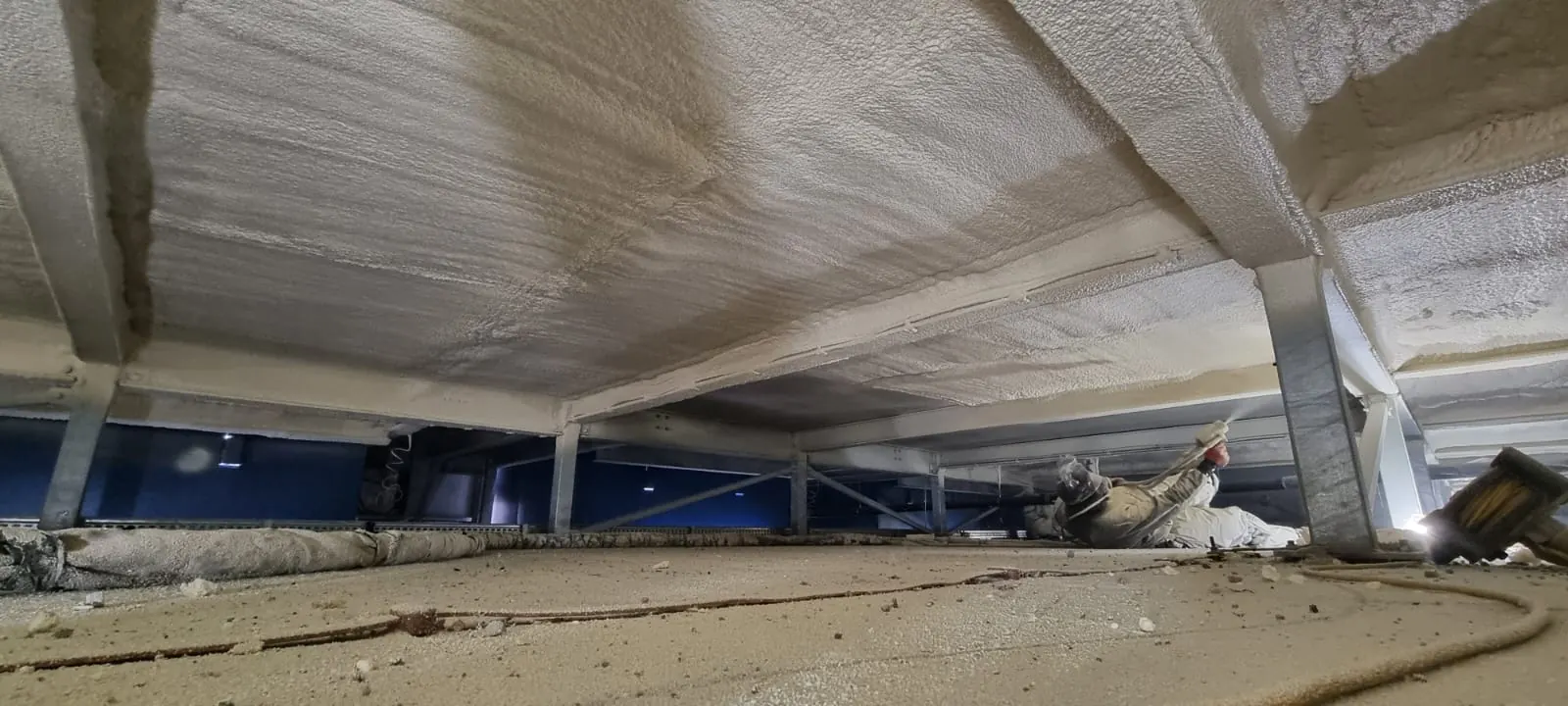
Commercial projects
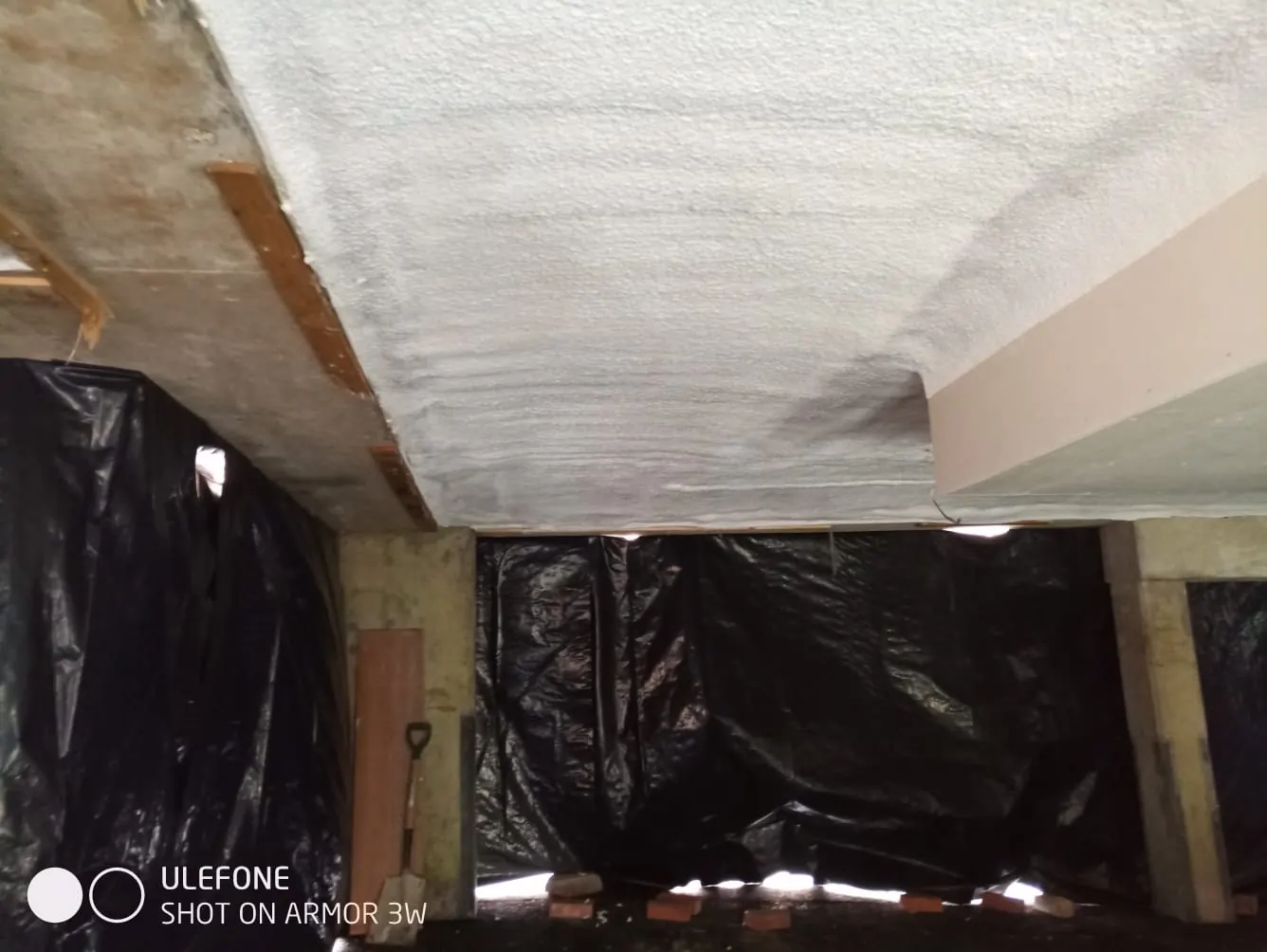
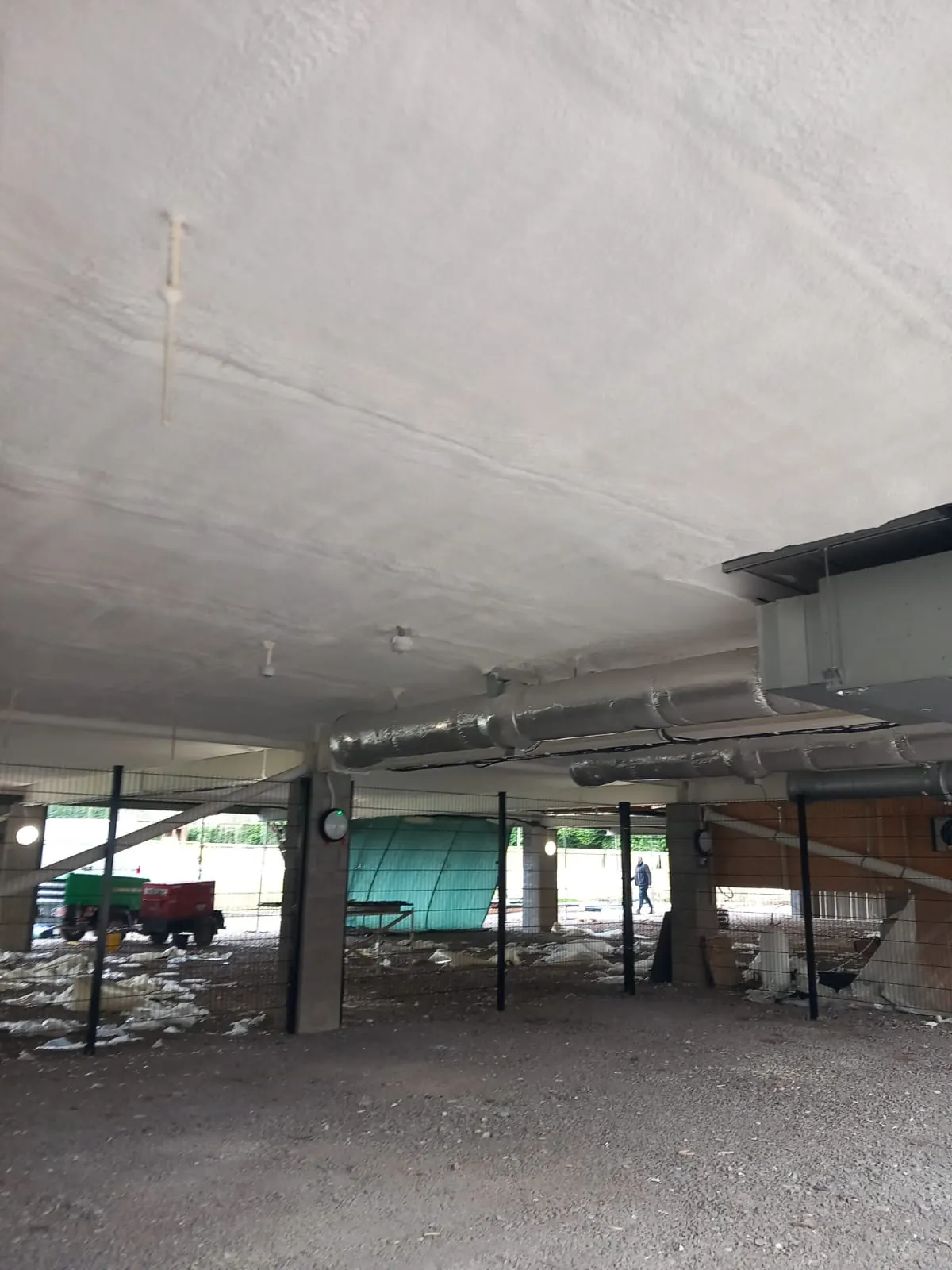
Richmond House Car Park
Underside of a car-park deck sealed and insulated in-situ.

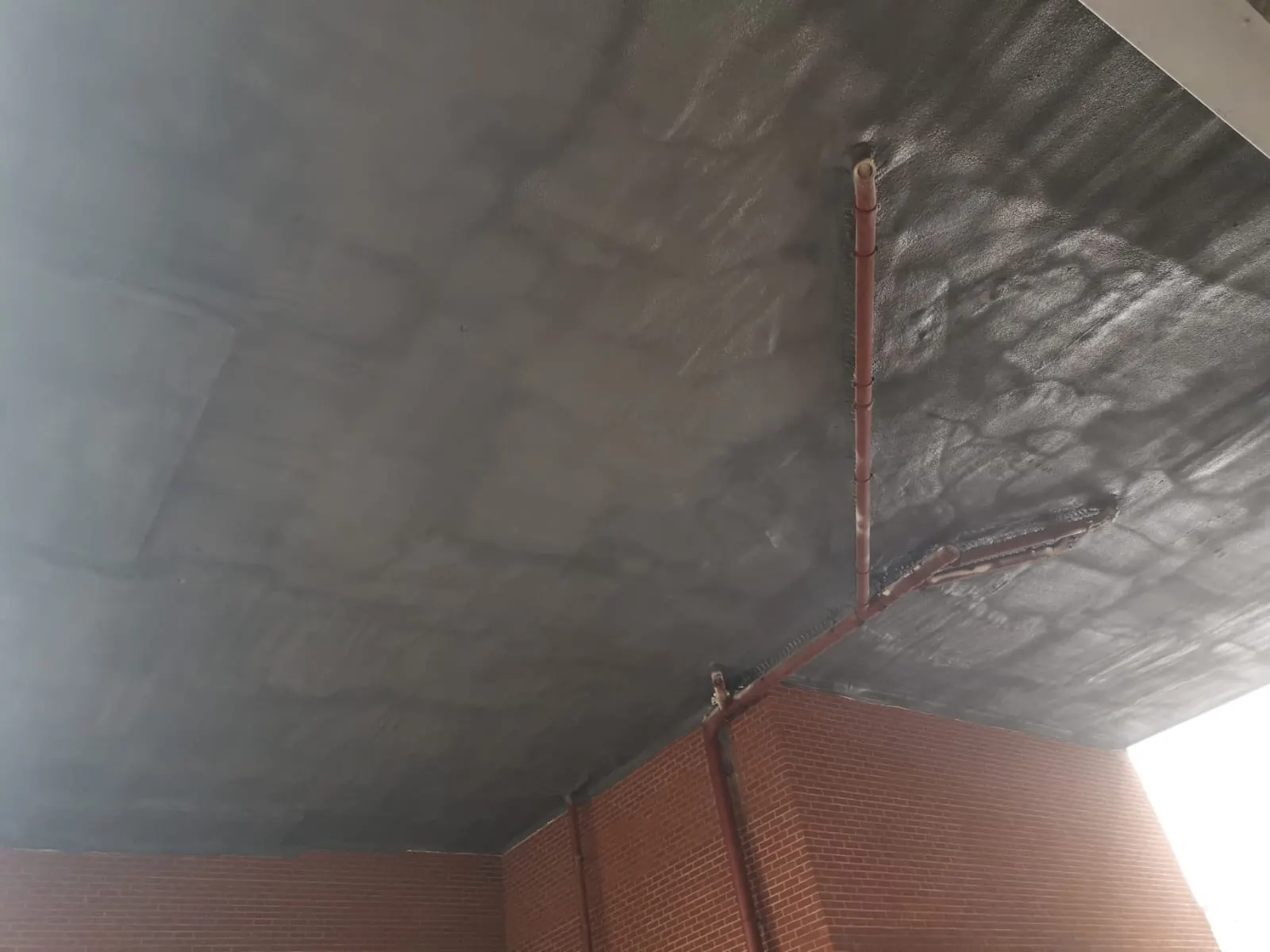
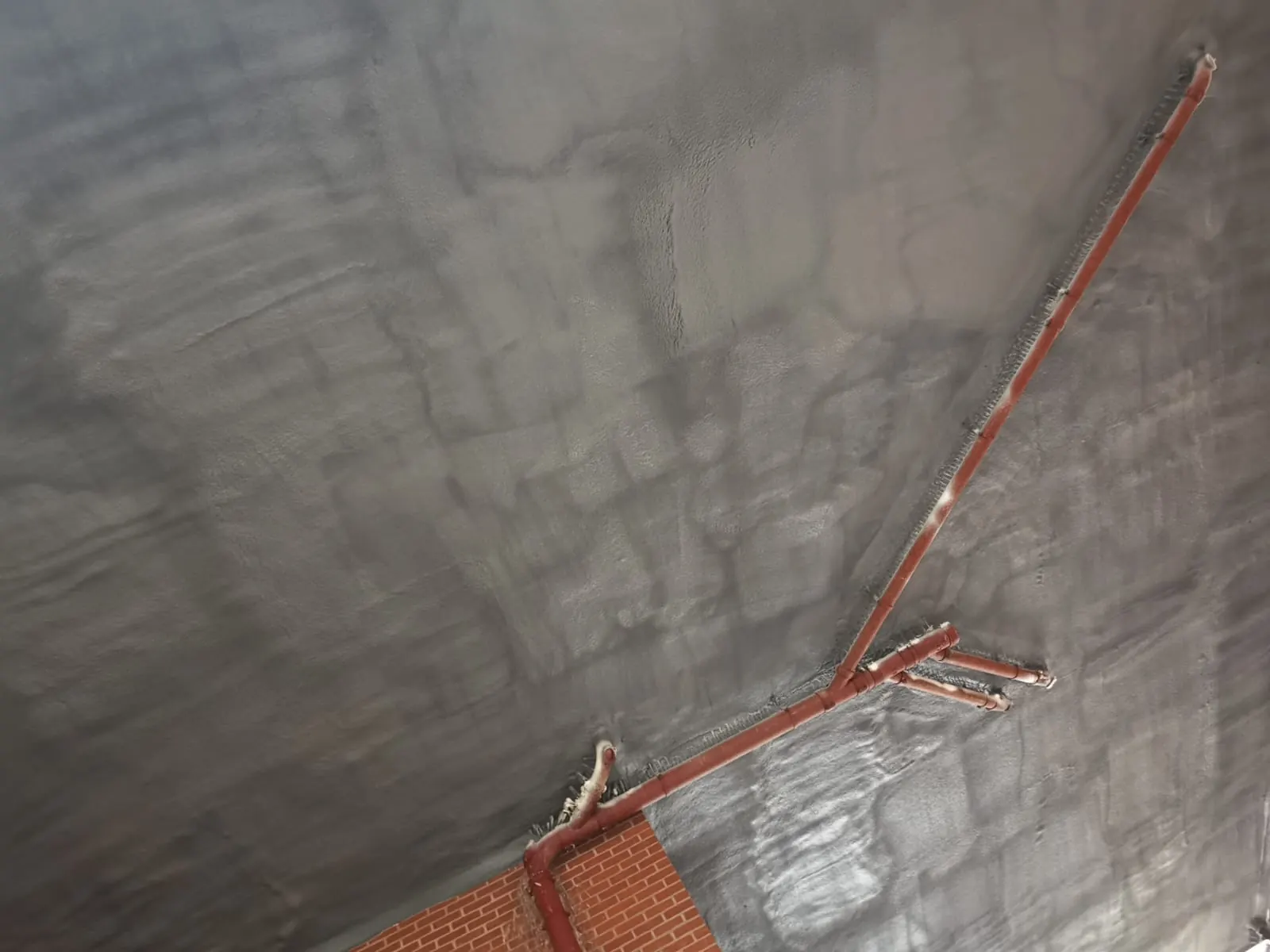
The Box, Plymouth
Concrete soffit spray foam eliminating cold-bridging.
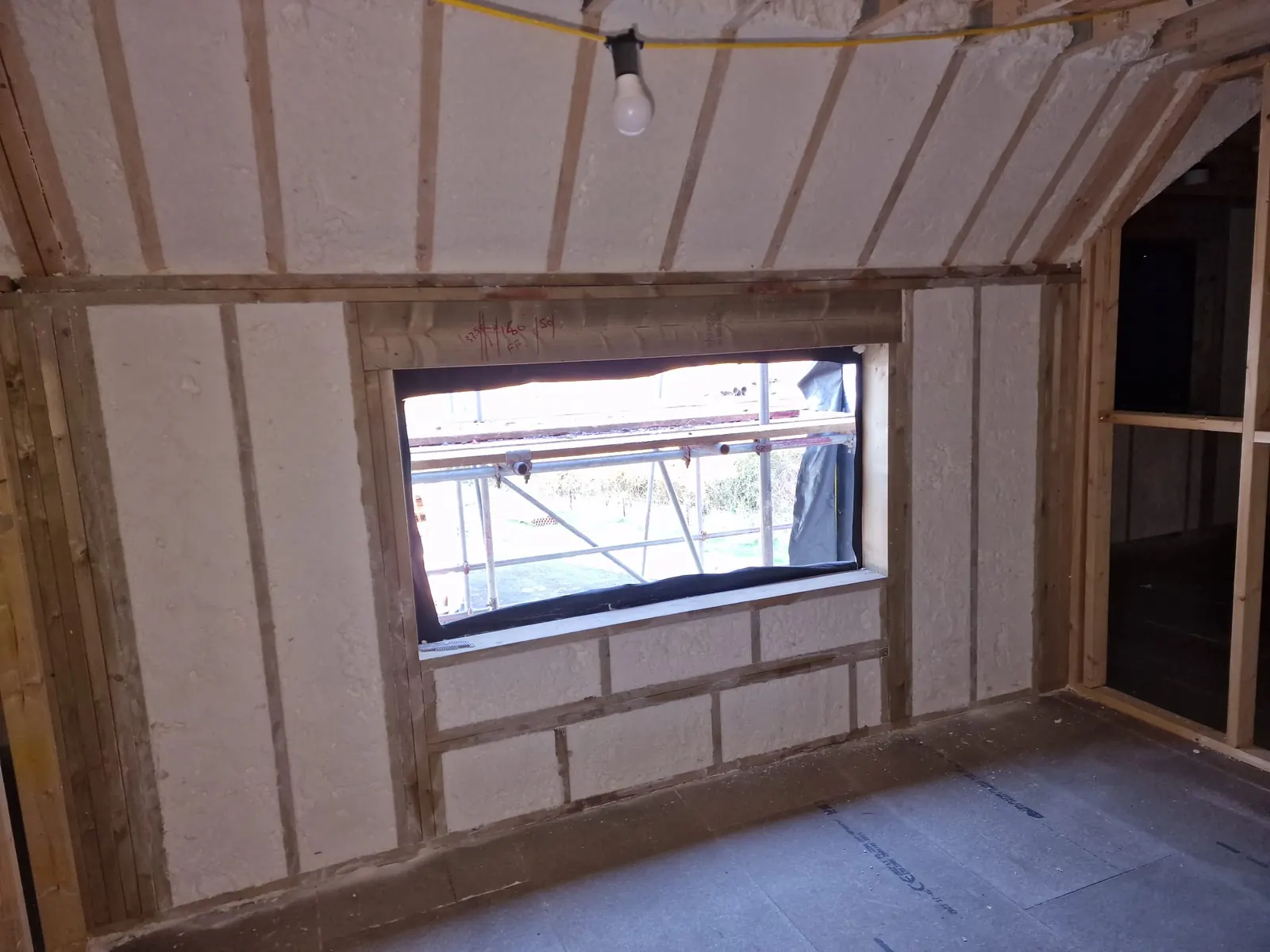
RBW Carpentry
Cavity-filling spray foam for an airtight commercial partition.
Get a quote for your project
Send us your building details and our technical team will specify the right system and a clear budget. No obligation.
Suspended Ceiling insulation, answered
Do you have to remove the whole suspended ceiling to insulate above it?
No. Tiles are lifted in sections to give access to the void, and the foam is sprayed onto the deck or soffit above the grid. The ceiling system and the occupied space below stay largely intact, then tiles are reinstated once application is complete.
Will it stop condensation dripping onto our ceiling tiles?
Yes. Tile staining usually comes from condensation forming on a cold, uninsulated deck above the void. By insulating and sealing that soffit, the foam raises its surface temperature so condensation no longer forms there and drips down onto the tiles.
Can it be applied around the services in a congested ceiling void?
Yes. The foam expands around ducts, cable trays, pipework and light fittings already in the void, sealing tightly to them as it cures. We survey the void first and coordinate access so existing services are protected and remain operational.
Can a shop or office keep trading during the work?
Usually yes. Access is phased section by section, with overspray containment and out-of-hours working where needed, so retail and office floors can keep operating while the deck above the ceiling is insulated.
Does insulating the void reduce energy bills?
Sealing and insulating an uninsulated deck cuts heat loss and stops conditioned air leaking into the void and risers, which reduces heating and cooling demand. The continuous air seal also improves whole-building airtightness, supporting lower running costs.
What depth is applied to a soffit?
Typically 25–100 mm depending on the target U-value and the structure — confirmed at the free survey and specified in writing before work starts.
Is overhead spray application safe for concrete?
Yes — the foam bonds with a low exothermic reaction and no mechanical fixings, making it well suited to concrete slabs, Metsec decks and steel structures.
What fire rating can a sprayed soffit achieve?
With a DC315 intumescent finish the system achieves Euroclass B-s2,d0 — commonly specified for car parks and occupied buildings.
Insulate your ceiling voids the right way
Specialist commercial spray foam, installed UK-wide by the Duratite Group's spray foam specialists.
Book a Free Survey →or call 01208 832 602