Updated 22 September 2026 · ThermoFoam
First distinguish condensation from a leaking roof
Water below a roof is a symptom, not a diagnosis. Rain entering at damaged sheets, fixings or junctions requires a different response from moisture condensing on a cold internal surface. Both problems can occur in the same building.
Note when the dripping happens, whether it follows rain or a cold morning, which surfaces are affected and what the building was doing at the time. These observations help the survey; they do not prove the cause on their own. Do not access a fragile roof to investigate.
Temperature, humidity and the dew point
Surface condensation can occur when a surface is cold enough for moisture in the adjacent air to condense. The dew point depends on the air’s temperature and moisture content. A roof does not have to leak for droplets to form beneath it.
Processes, washdowns, livestock, damp goods and people can add moisture. Heating, ventilation, open doors and changes of use affect conditions too. Measuring internal temperature and relative humidity over representative operating periods is more useful than assuming that all roof drips have the same cause.
Three parts of a moisture-control strategy
| Design consideration | Questions for the survey |
|---|---|
| Moisture sources | What brings water vapour into the building, and can it be reduced or extracted near its source? |
| Ventilation and use | How does moist air leave? Do heating patterns, closed vents or a changed use affect conditions? |
| Insulation and junctions | Which surfaces are cold, what is the construction, and how will edges, penetrations and untreated areas be detailed? |
Where closed-cell spray foam can help
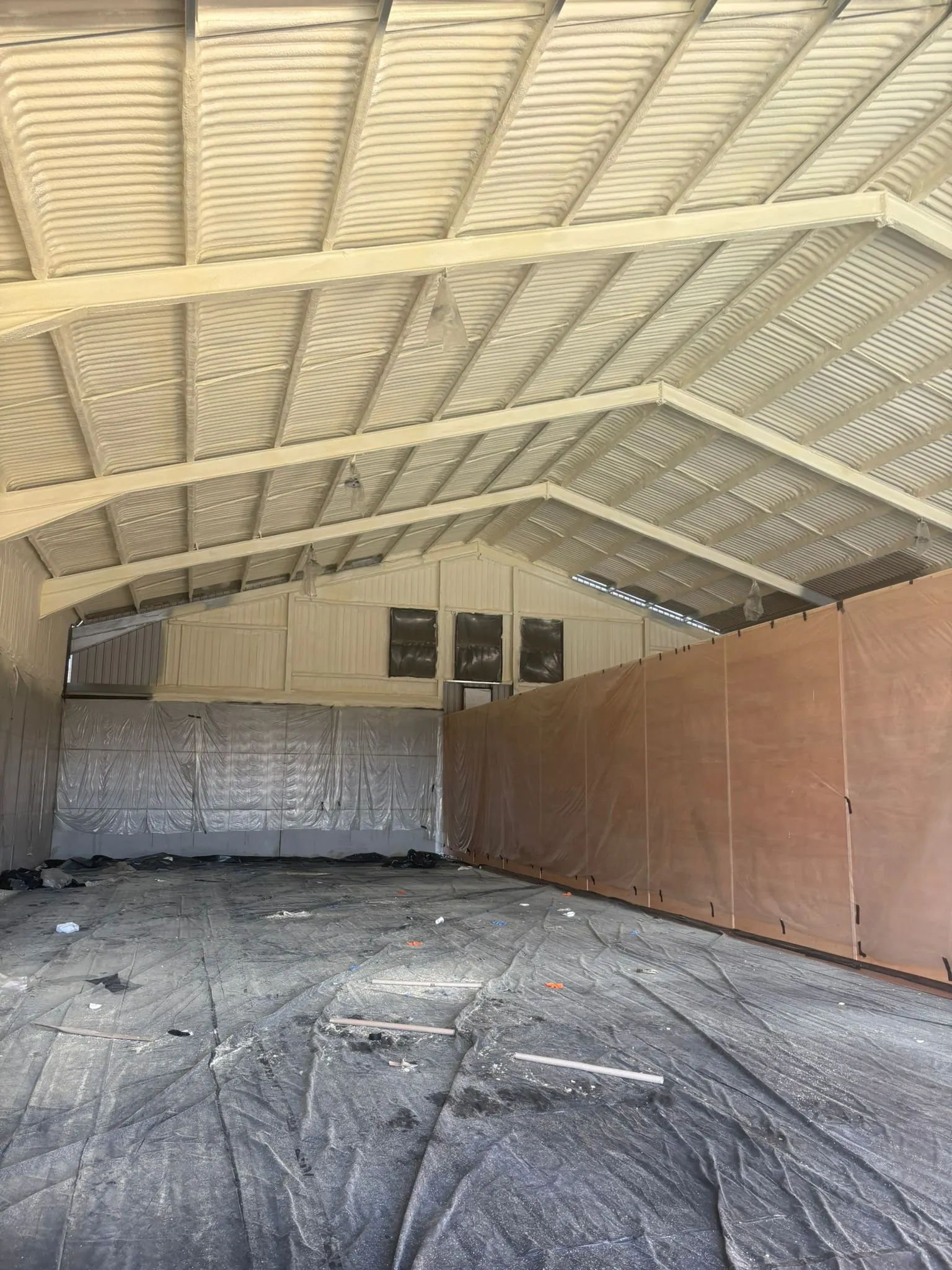
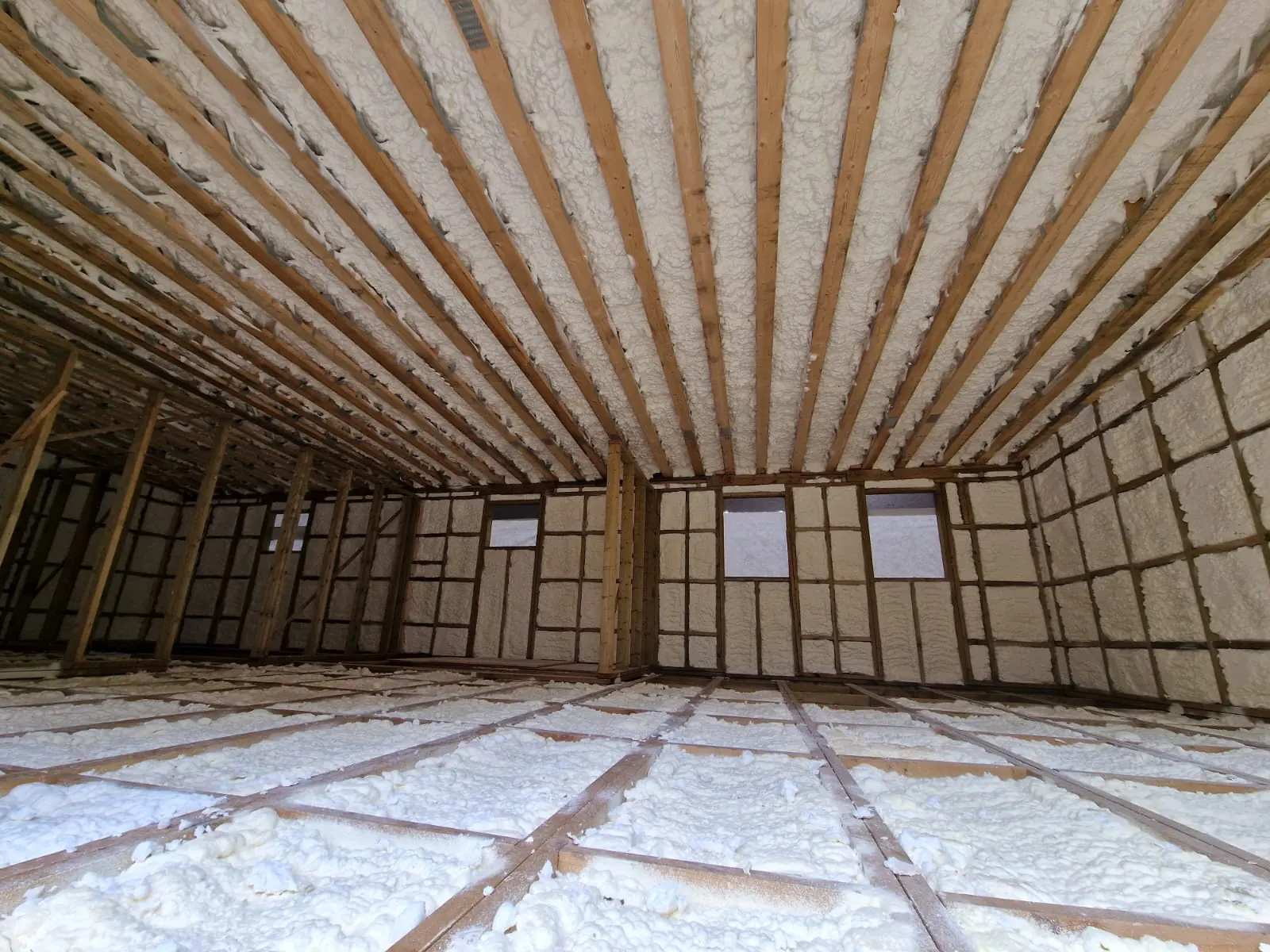
On a suitable prepared surface, spray foam can follow the roof profile and form an insulating layer. When the thickness and details are designed for the building, it can help control condensation on treated internal surfaces by changing their thermal conditions.
It is not a guarantee against every drip. Untreated steelwork, junctions, ventilation and high internal moisture loads still matter. Foam also does not repair roof leaks or strengthen a structurally unsound roof. See the anti-condensation service for the assessment and quotation process.
Surface and interstitial condensation are different
Visible droplets form on a surface. Interstitial condensation occurs within a construction, where it may not be apparent from the room or work area. Existing insulation, membranes, air leakage and vapour movement all influence the assessment.
Adding foam changes the build-up. The design needs to assess moisture risk for the complete construction and identify whether an additional air or vapour control layer is needed. A closed-cell product’s vapour resistance does not automatically make every roof moisture-safe.
Insulation, ventilation and coatings have different jobs
Ventilation or extraction can address moisture loading. Insulation addresses heat transfer. Absorbent anti-condensation linings can temporarily retain moisture in suitable applications, but their capacity and drying conditions need consideration. The right solution may combine measures.
An external roofing system addresses a weather-facing build-up and needs its specified finish. Underside insulation should not be presented as an equivalent waterproofing treatment. If the sheets contain asbestos, use a roof-specific assessment before choosing work.
See a real roof application
The TJW warehouse case study includes before, application and completed roof photographs. Use the example to understand coverage and detailing, then assess your own roof rather than copying its specification.
What to record before your survey
Send safe photographs of the roof underside and affected areas, the site postcode, building use and any available drawings. Describe when moisture appears, known leaks, heating, ventilation, processes and existing insulation. Include any asbestos information.
After work, review conditions through relevant weather and operating periods. Check the agreed handover and maintenance requirements, and report new leaks or changes in use. Discuss your roof condensation problem.
Application photography