Unheated storage
Discuss the goods stored, moisture brought inside, ventilation and roof condition. A roof-only treatment is a different scope from insulating the complete shell.
Closed-cell spray foam insulation for steel shipping containers used for commercial storage, workshops and conversions. UK-wide surveys and specifications for your container and its intended use.
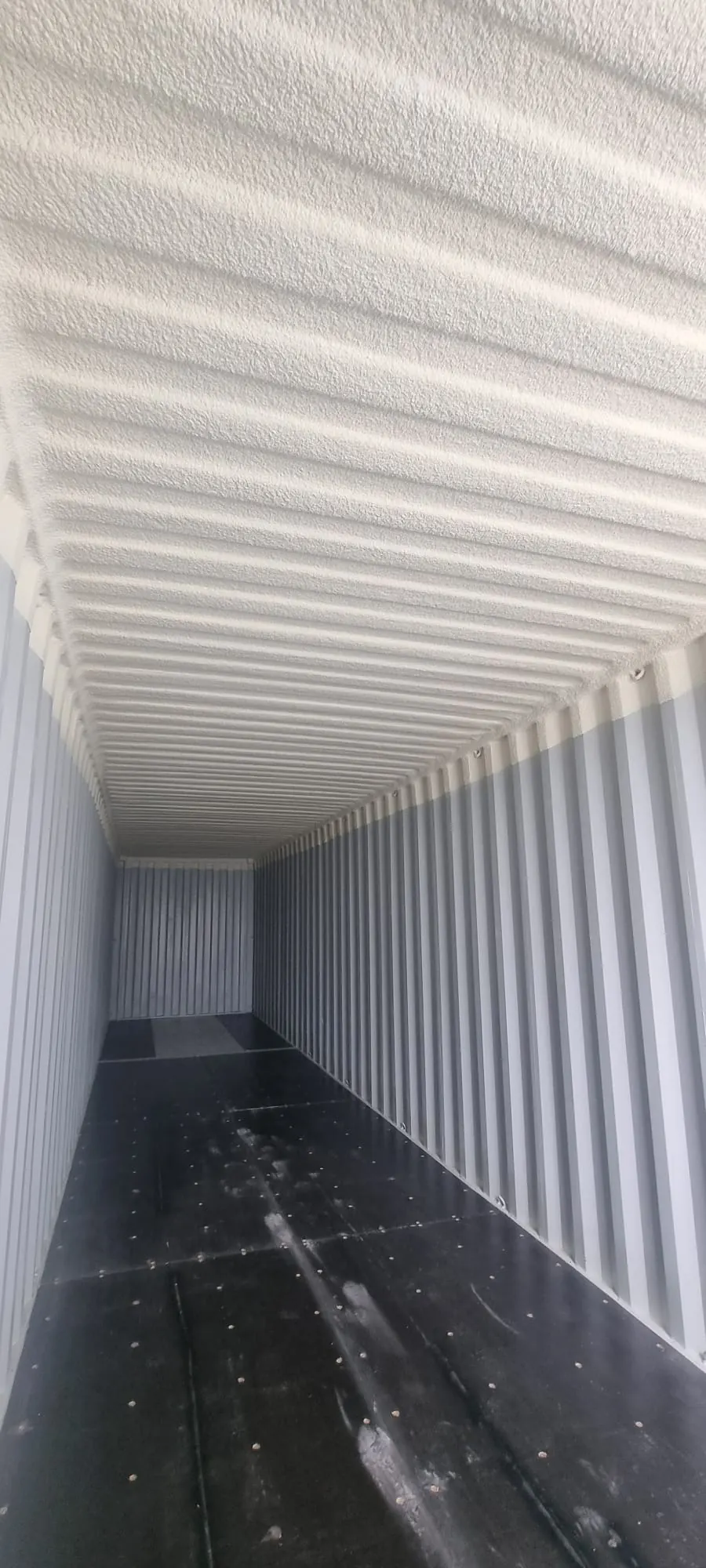
A steel container can lose heat quickly and develop condensation when moist air meets a cold surface. The resulting drips, often called container rain, can affect stored stock, equipment and interior finishes. Insulation is one part of the solution; moisture sources, ventilation and the condition of the shell also matter.
Enverge Nexseal LE is a closed-cell polyurethane spray foam that self-bonds to a suitable prepared surface. Applied inside the container, it follows the corrugated profile and reduces heat transfer through the treated surfaces. The design needs to consider doors, junctions and untreated areas as well as the roof and walls.
We assess the container and proposed use before specifying the build-up. A store for tools, an occupied workshop and a temperature-controlled unit can have very different requirements. Tell us what you need to protect and how the container will be used.
Application examples from Duratite’s container-insulation gallery; these are different build-ups, not one before-and-after sequence.
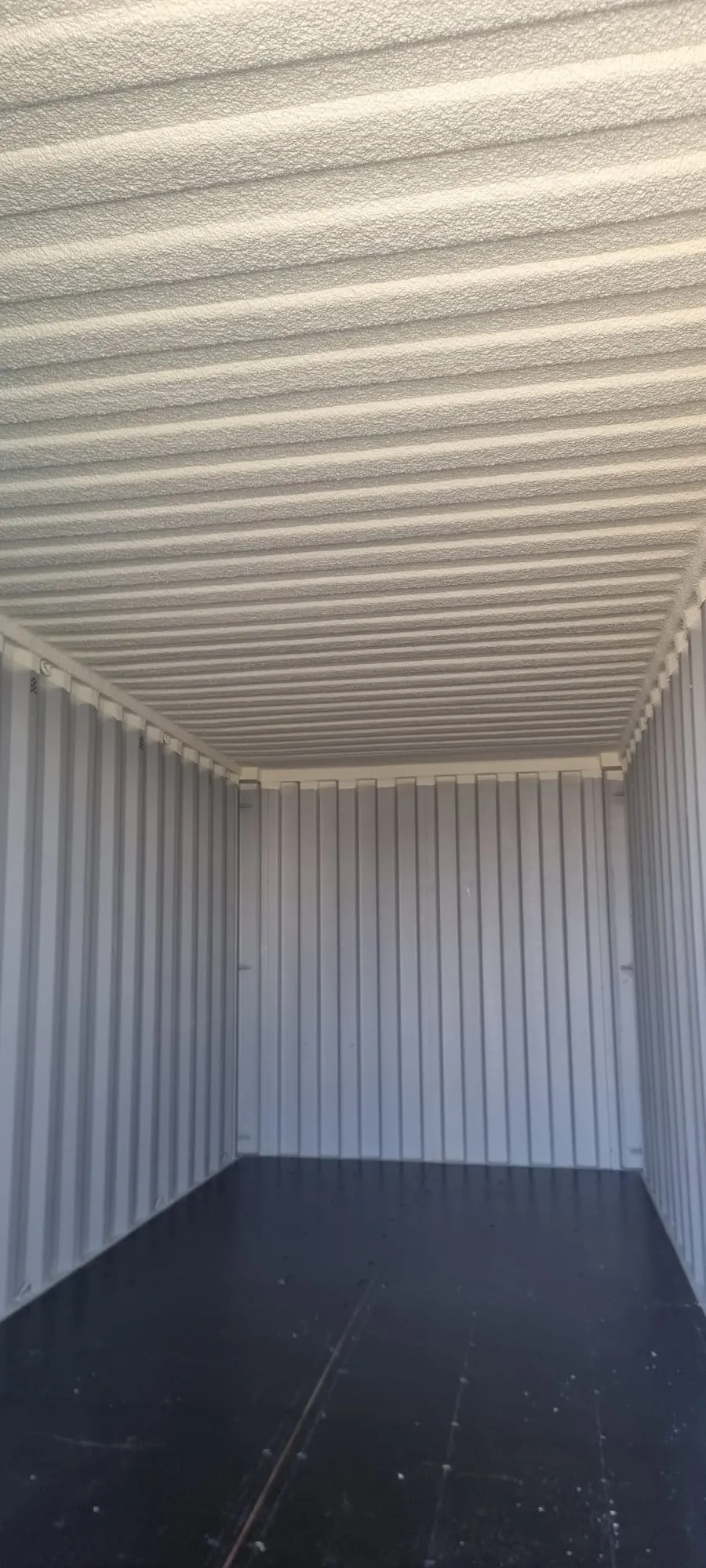
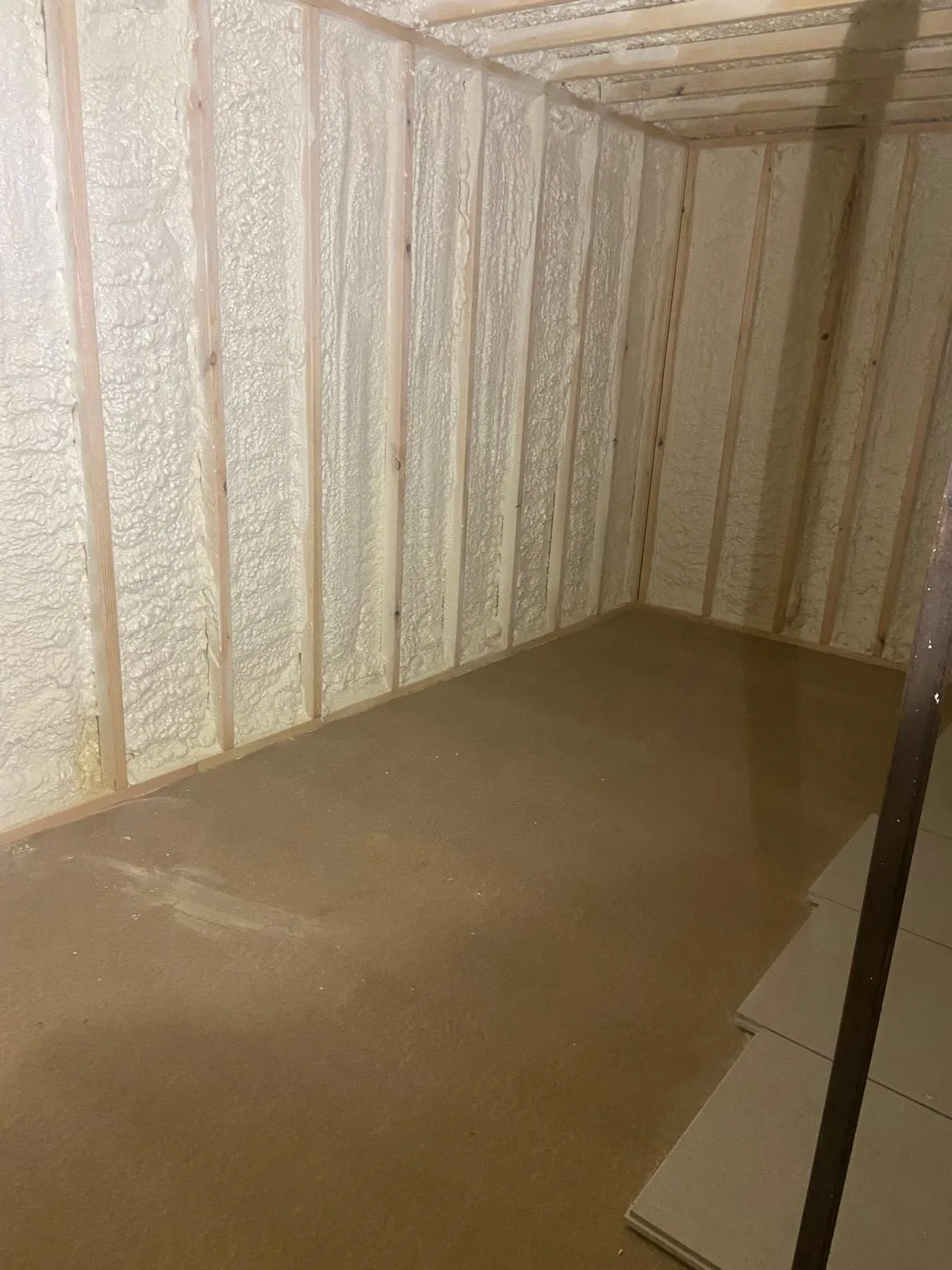
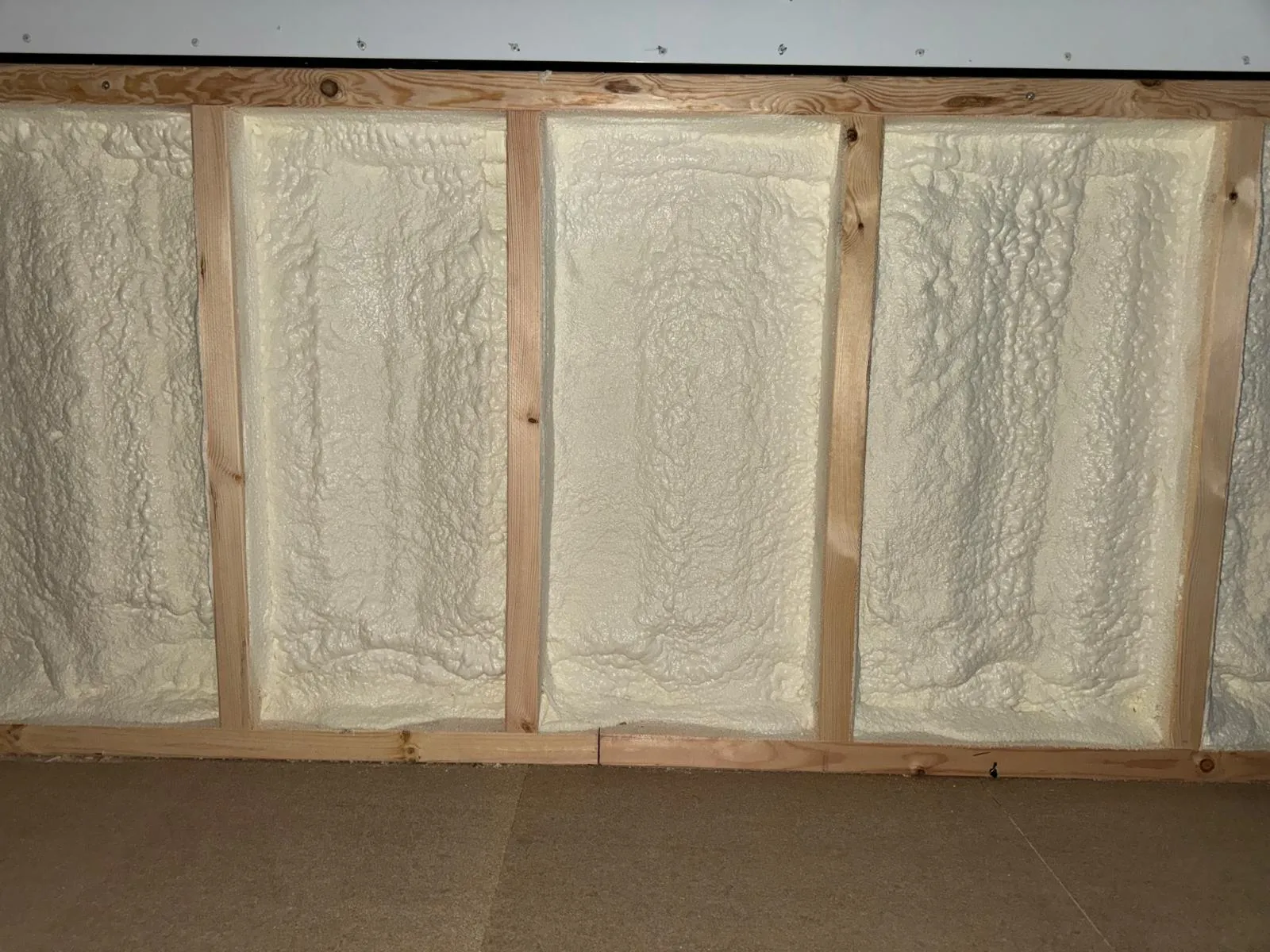
See the source project and photographs on Duratite → · Select a photo for the full view.
Discuss the goods stored, moisture brought inside, ventilation and roof condition. A roof-only treatment is a different scope from insulating the complete shell.
Coordinate insulation with heating, ventilation, windows, doors, electrics and the required internal lining. Allow for the finished dimensions before fixing the fit-out.
Provide the required temperature range and operating conditions. Insulation slows heat transfer; active heating, cooling or dehumidification may also be needed.
Typical published product values. They do not establish the U-value or fire performance of the complete building assembly. Full technical specification →
For a 20ft, 40ft or high-cube container, tell us the dimensions, number of units and whether you want the roof, walls, doors or floor included. Overall container length alone does not give the area to be treated: openings, internal partitions and the chosen coverage all affect the work.
A storage container needs a specification suited to its contents and moisture conditions. An office or workshop conversion also needs the proposed heating, ventilation, internal finishes and fire requirements considered. Insulation alone does not provide cooling or guarantee a controlled storage temperature.
There is no single foam thickness that suits every container. We assess the thermal target and condensation risk before recommending the thickness and build-up. Where required, the design includes additional vapour control and a suitable protective lining or coating.
The quote depends on the area to be sprayed, specified thickness, preparation, access, number of containers and any protective finish. A roof-only treatment and a fully lined conversion are different scopes, so comparing headline prices per container can be misleading.
Send your postcode, container size, photographs, intended use and required coverage through the survey form. Include any leaks, visible corrosion or existing coatings so these can be considered before the work is priced. Our commercial spray foam cost guide explains the main quotation factors.
Confirm what needs moving or protecting, the access available and the planned fit-out. Surface preparation, application conditions, ventilation and re-entry arrangements are agreed for the specified product and site. Completion and reoccupation times are confirmed for the project rather than assumed from the container size.
Send your site postcode to discuss coverage, survey arrangements and access for your project.
Roof only, roof and walls, or a wider conversion scope? Confirm the treated surfaces, specified depth and allowance at doors and structural ribs.
Identify shell repairs, treatment of existing coatings, protection of fittings and any required internal lining or protective coating.
Confirm where the container will be treated, contents to remove, power/access needs, re-entry arrangements and the documentation supplied.
The container application photographs show a storage ceiling, conversion lining and batten detail from Duratite’s library. They are different examples, so the specification should follow your intended use rather than copy a photograph.
For a portable building with a different construction, see modular and portable building insulation.
Send us your building details and our technical team will specify the right system and a clear budget. No obligation.
Correctly specified insulation can help control surface condensation. Container rain also depends on moisture sources, ventilation, temperatures and untreated areas. The survey considers these together; foam alone is not a guarantee against every condensation problem.
The price depends on the treated area, specified thickness, surface condition, access, number of units and finish. Send the container dimensions, postcode, intended use and photographs for a project-specific quotation.
Yes. Tell us the size, whether it is standard-height or high-cube, and which surfaces need treating. The specification and quote are based on the actual coverage and use, rather than container length alone.
Allow for the specified insulation thickness plus any internal lining or service space. The foam follows the corrugations, but it still reduces the finished internal dimensions. Check the proposed build-up before planning the fit-out.
Yes, subject to assessment of the conversion. The design needs to consider thermal performance, ventilation, fire requirements and the internal finish as well as the foam itself.
Existing corrosion, leaks and unsuitable coatings need assessment and appropriate treatment before insulation. Spray foam is not a substitute for repairing the container shell.
Insulation can reduce heat transfer, but a defined storage temperature also depends on cooling or heating, door openings, air leakage and the complete design. Tell us the temperature and operational requirements so the proposed use can be assessed.
Thickness depends on the thermal target, intended use and condensation assessment. Vapour control, junctions and the protective finish are considered as part of the complete build-up; there is no universal thickness for every container.
The foam self-bonds to a suitable prepared surface, so framing is not required just to hold the foam in place. An internal lining, service zone or conversion fit-out may still need its own support.
Timing depends on preparation, coverage, thickness, access and site conditions. We confirm the application programme, ventilation and re-entry arrangements for the specified product and your project.
Specialist commercial spray foam, installed UK-wide by the Duratite Group's spray foam specialists.
Book a Free Survey →or call 01208 832 602