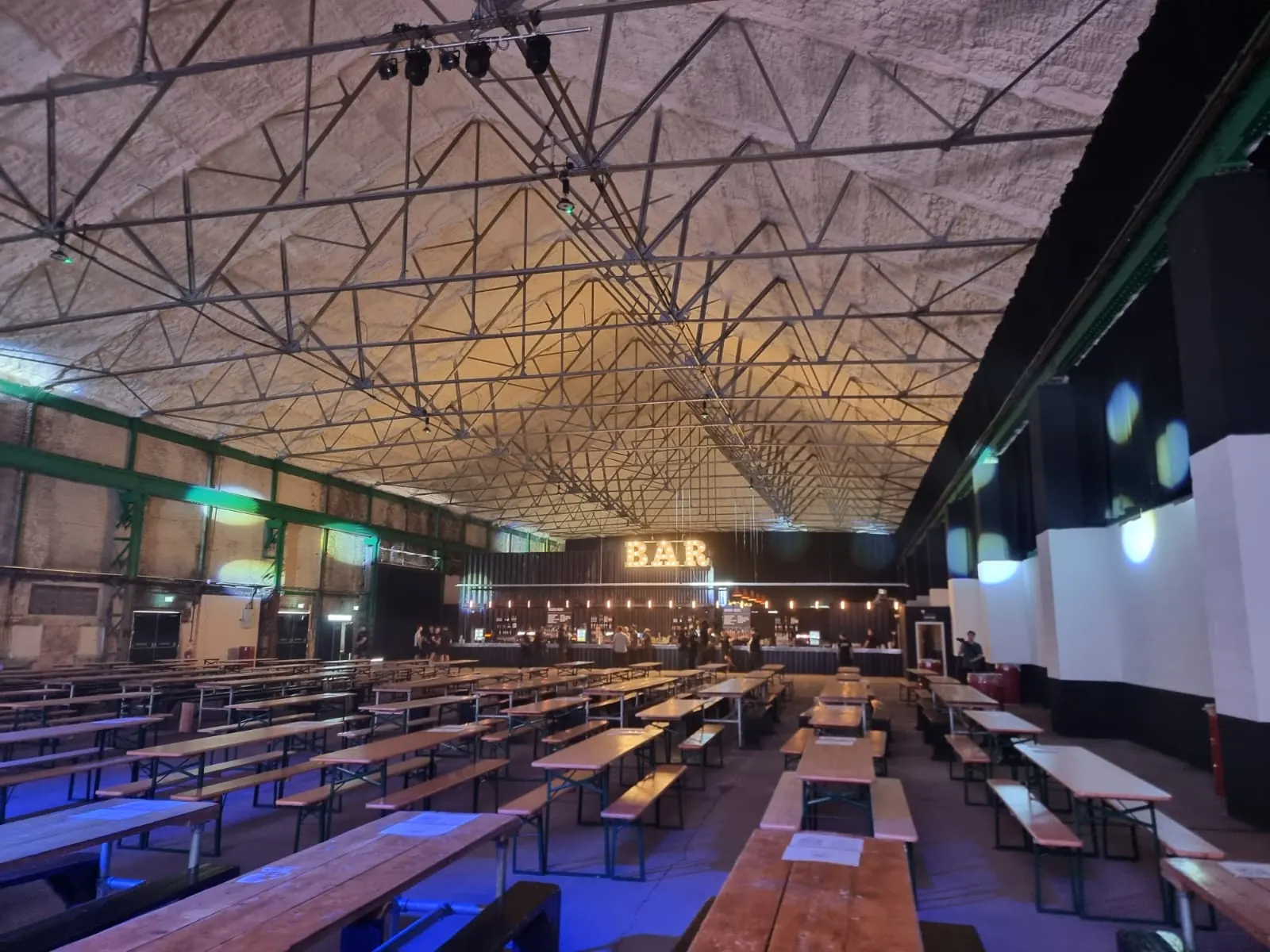
What Part L covers
Part L of the Building Regulations deals with the conservation of fuel and power — in practical terms, how well a building retains heat and how energy-efficient it is. For commercial, industrial and agricultural projects, this is assessed across the whole building rather than judged on any single product in isolation.
Spray foam insulation is one element that can contribute to a Part L strategy. ThermoFoam installs Enverge closed-cell spray foam (Nexseal LE), but final compliance always depends on the complete design and is determined by the project's design team and Building Control, not by the insulation alone.
How spray foam supports thermal performance
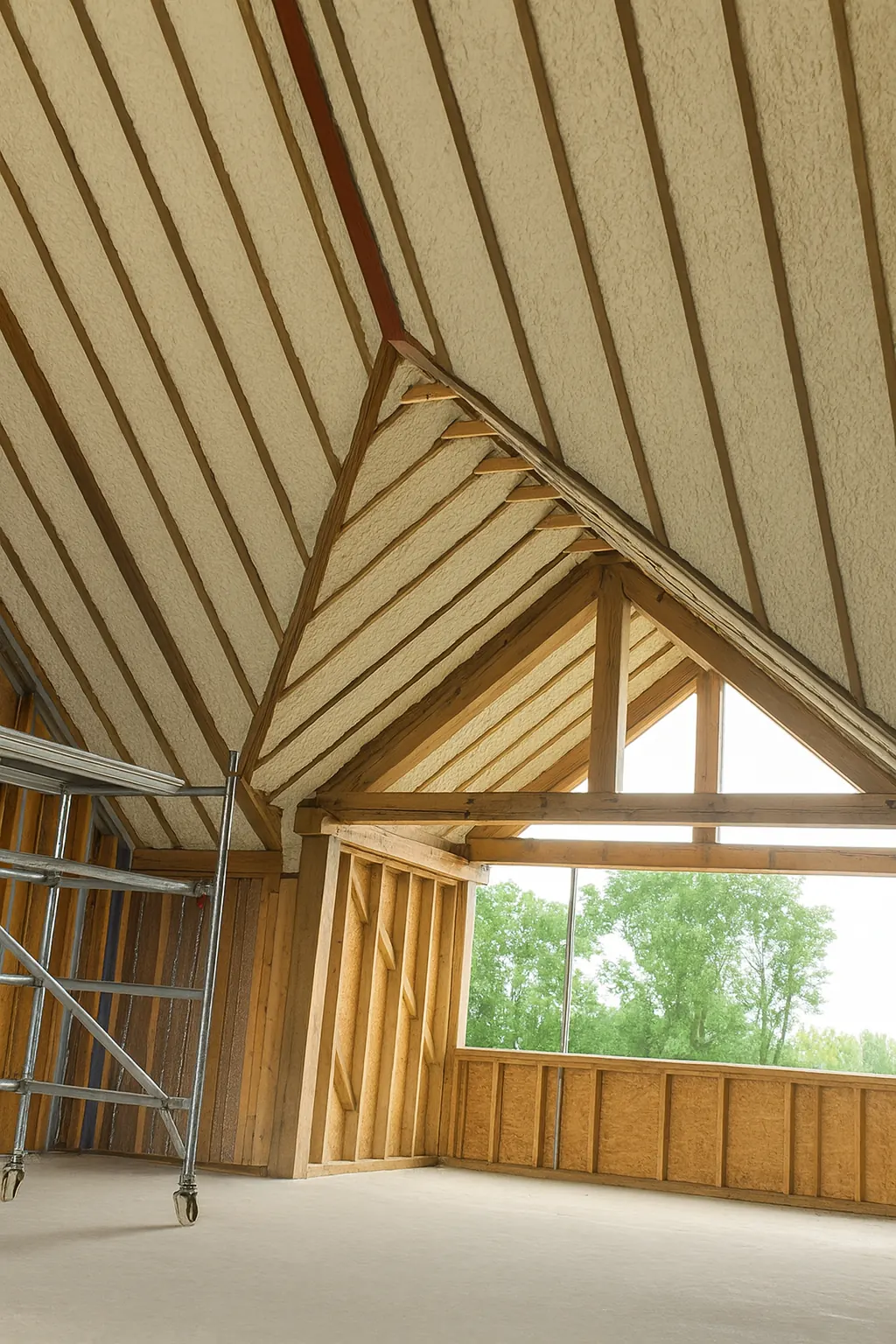
Closed-cell spray foam contributes to a building's thermal performance by adding continuous insulation directly to the building envelope. Because it self-bonds to the substrate as it cures, it forms an unbroken layer over roofs, walls and soffits without the gaps that can occur between rigid boards or batts.
This continuity is valuable for a Part L strategy because it helps reduce the thermal weak points and gaps that undermine real-world performance. The actual contribution to compliance depends on build-up, thickness and the wider design, which the design team will calculate for each specific project.
Air-tightness and air-permeability testing
Alongside thermal performance, Part L and associated testing consider air-tightness — how much uncontrolled air leaks through the building envelope. Reducing unwanted air leakage helps a building hold onto conditioned air and perform efficiently in service.
Because closed-cell foam is applied as a continuous, self-bonded layer, it can help reduce air leakage paths through the elements it covers. Air-permeability testing is typically carried out on the completed building, and results depend on the whole envelope and detailing — not on any single insulation product.
- Part L assesses thermal performance and energy efficiency across the whole building
- Continuous, self-bonded foam helps reduce thermal gaps and air-leakage paths
- Air-permeability testing is performed on the completed building
- Targets and results depend on the full design and detailing
Why compliance is a whole-building decision
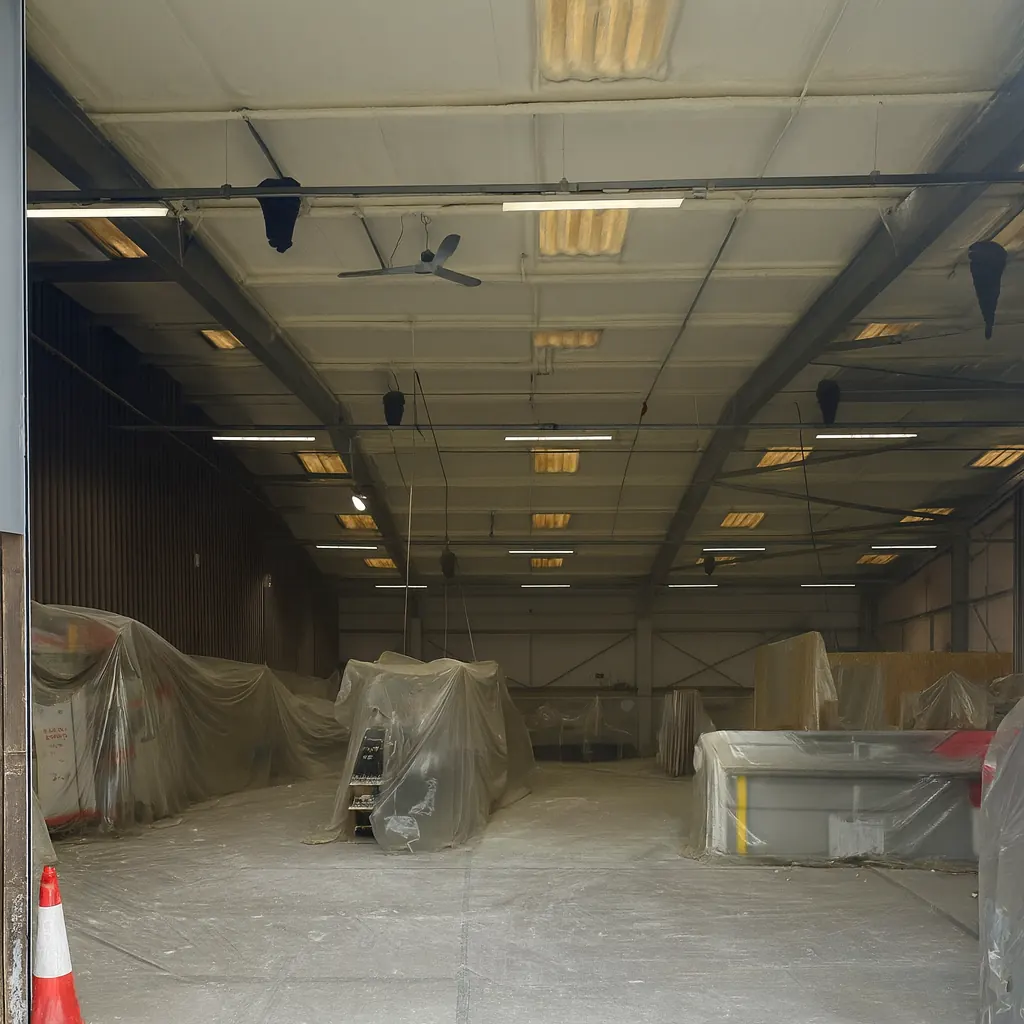
It is a common misconception that a single insulation product can be declared 'Part L compliant' on its own. In reality, compliance is demonstrated at building level, taking account of the fabric, services, glazing, ventilation and the way all the elements work together.
ThermoFoam's role is to deliver a high-quality, correctly specified spray foam element that supports the wider strategy. The numerical targets, calculations and sign-off sit with the design team, energy assessor and Building Control, who confirm that the building as a whole meets the regulations.
Working with your design team and Building Control
The best results come from engaging early. When spray foam is considered at design stage, the design team can model its contribution within the overall fabric strategy and detail the junctions correctly, rather than treating insulation as an afterthought.
ThermoFoam works alongside architects, M&E consultants, energy assessors and Building Control, providing the product information and certification — including full Enverge technical data sheets and BS EN 14315-1 test values for Nexseal LE closed-cell foam — needed to support the compliance case for the project.
Certification that supports the case
Robust third-party certification helps a compliance discussion run smoothly. The closed-cell foam ThermoFoam installs carries a 25-year manufacturer-backed warranty, which gives design teams and Building Control documented, independently assessed information about the product.
Duratite is the UK distributor of record for the Enverge range, so clients receive consistent product documentation and a 25-year manufacturer-backed product warranty on the closed-cell foam. Always defer to your design team and Building Control for the final, project-specific compliance position.